The Modern LED Chandelier Guide
A modern LED chandelier uses 60–80% less energy than a bulb-based fixture and runs cool enough for Indian summers. Here is how to pick the right size, style, colour temperature and driver for every room.
Meta Details
| Meta title | Modern LED Chandelier: 8 Smart Checks Before You Buy |
|---|---|
| Meta description | Save up to 80% on lighting energy with a modern LED chandelier that lasts 15 years. Get room sizing, CRI and dimming advice. See the 8-point buying checklist. |
| URL slug | modern-led-chandelier |
| Primary keyword | modern LED chandelier |
| Secondary keywords | LED vs traditional chandelier, LED chandelier for living room, how to choose an LED chandelier |
| Excerpt | A modern LED chandelier uses 60 to 80 percent less energy than a bulb-based fixture and runs cool enough for Indian summers. Here is how to pick the right size, style, colour temperature and driver for each room. |

A ring-style modern LED chandelier — the integrated module replaces the bulb entirely.
A traditional chandelier with twelve incandescent bulbs draws around 720 watts every evening. A modern LED chandelier with the same number of points draws under 120 watts and produces the same warmth. That gap runs year after year, and the difference shows up in every electricity bill.
This guide covers why a modern LED chandelier is the single most impactful lighting upgrade you can make, the styles that work for Indian homes, how to size one for each room, and the smart features worth paying for in 2026.
At a glance
- A modern LED chandelier uses 60–80% less energy than a traditional bulb-based fixture.
- Quality LED modules last 25,000–50,000 hours — roughly 15 to 25 years of normal evening use.
- LED drivers produce almost no heat, which matters in Indian summers and rooms without central air.
- Smart-ready models adjust colour temperature and brightness from a phone, wall remote, or voice.
- Upfront cost is higher, but the 5-year total cost of ownership is almost always lower.
The core difference
What makes a modern LED chandelier different?
The difference is not just the bulb. In a traditional chandelier, the design starts with the lamp holder — the fixture is built around a socket that accepts a replaceable bulb. In a modern LED chandelier, the LED module is integrated into the fixture itself. The arms, rings, or panels are the light source. That single change unlocks three things no bulb-based chandelier can offer:
1
Thinner, cleaner lines
Without a bulb socket, designers can build fixtures a centimetre thick. Rings, spirals, wave forms and flat geometric shapes become possible.
2
Even light distribution
An integrated LED strip spreads light across the full length of an arm or ring instead of concentrating it at a bulb point — softer, shadow-free illumination.
3
Longer life, less maintenance
There are no bulbs to replace. The LED module and driver are rated for tens of thousands of hours and, in a well-ventilated fixture, routinely exceed the rating.
Browse the full range of modern LED chandeliers to see how integrated design changes the shape of a fixture.
The honest comparison
LED vs traditional chandelier
The table below compares the two across the factors that actually matter when you're spending money on a fixture you'll live with for a decade.
| Factor | Traditional | Modern LED |
|---|---|---|
| Energy use | 40–60W per bulb (480–720W for 12 bulbs) | 5–9W per point (60–108W for 12 points) |
| Lifespan | 1,000–2,000 hours per bulb | 25,000–50,000 hours (integrated module) |
| Heat output | High — 90% of energy lost as heat | Very low, safe to touch after hours of use |
| Bulb replacement | Every 6–12 months in regular use | None for 10–15+ years |
| Dimming | Needs a compatible dimmer + dimmable bulbs | Built into the driver on most models |
| Colour temperature | Fixed by the bulb you buy | Adjustable, warm to cool, on smart models |
| Design range | Limited by socket and bulb shape | Rings, spirals, panels, waves, geometric forms |
| Upfront cost | Lower | Moderately higher |
| 5-year total cost | Higher (energy + replacement bulbs) | Lower |
The honest trade-off: a traditional chandelier with crystal arms and visible candle bulbs has a warmth and sparkle some integrated LED fixtures cannot replicate. If that look is what you want, pair a crystal chandelier with LED filament bulbs in 2700K warm white — you get the look and still save energy. But if you want a fixture that's thinner, cooler, longer lasting and ready for smart controls, a modern LED chandelier is the better investment.
Room by room
Which rooms benefit most?
Every room benefits, but some more than others — depending on how long the light stays on and how much heat it throws.
Living Room
Runs the longest hours, so energy savings compound fastest. Size it with the room-width rule: add the room's length and width in feet, convert to inches for the fixture diameter. A 15×18 ft living room wants a fixture roughly 33 inches across.
Dining Room
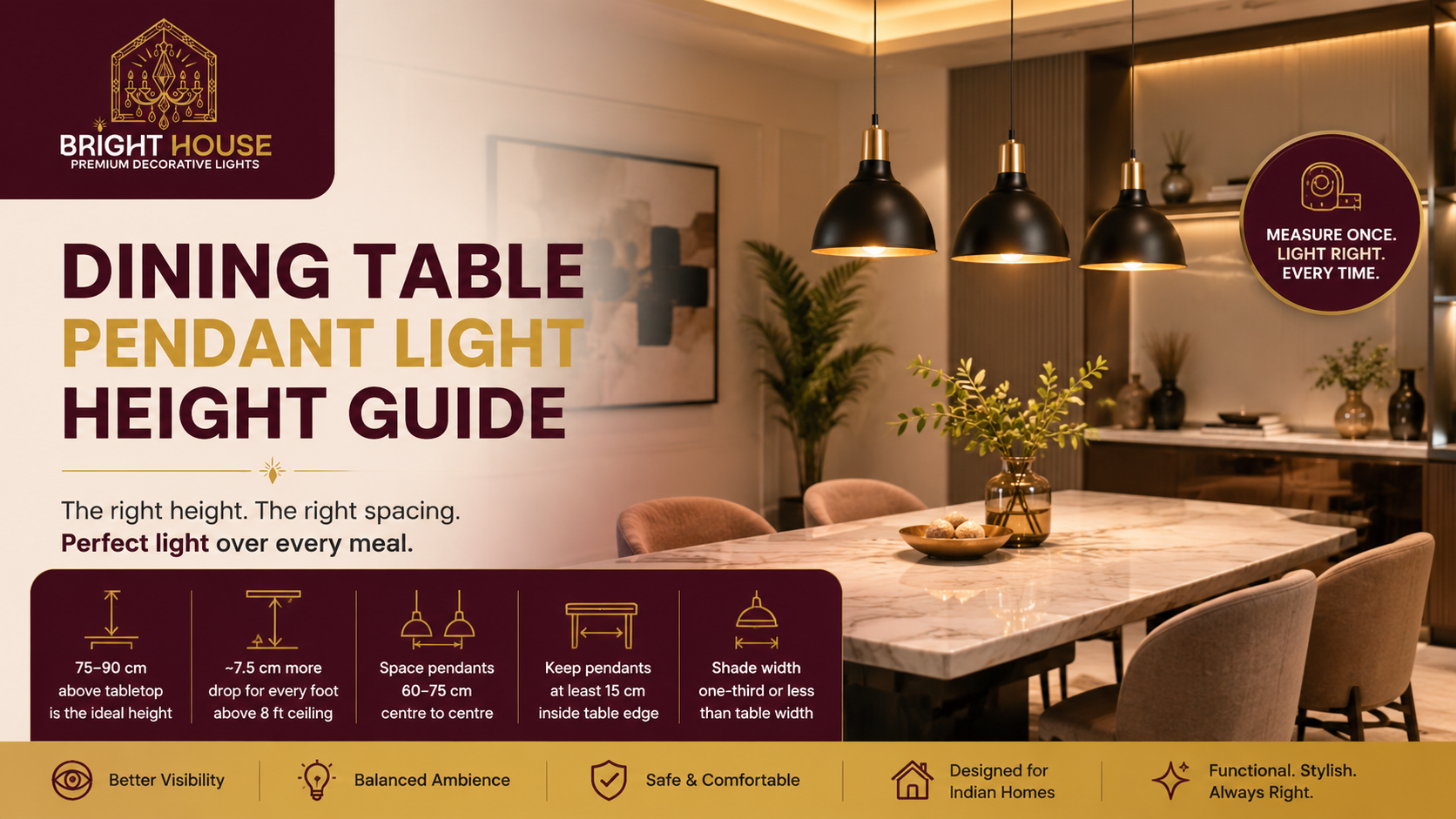
Hangs lower than any other fixture in the house, which makes heat a real issue over food and people. Hang the base 30–34 inches above the table surface, and match the fixture diameter to roughly half the table width.
Bedroom
Needs a fixture that dims low enough for the last hour before sleep — most modern LED chandeliers dim to 5–10%. Pick a fixture no wider than two-thirds of the bed width, and keep colour temperature at or below 3000K.
Foyer & Double Height
Changing a bulb at 14–18 feet needs scaffolding or a lift. A modern LED chandelier removes that cost entirely, since the module lasts the fixture's lifetime.
Five directions
The main styles of modern LED chandeliers
LED technology freed designers from the socket-and-arm format. The result is five broad styles, each with a different visual weight.
Ring & Halo
Illuminated rings suspended at different heights, light from the inner or outer edge — a floating, weightless effect. Best for contemporary, minimalist interiors.
Spiral & Helix
A continuous LED strip wound into a spiral or double helix. Fills stairwells and double-height foyers without looking stretched.
Geometric & Angular
Cubes, rectangles, hexagons and intersecting planes with LED strips along the edges. Suits architectural interiors with strong lines.
Wave & Organic
Flowing, asymmetric forms that mimic natural curves, so the light itself moves in a wave. Softens sharp modern rooms.
Sputnik & Branch
A mid-century sputnik or branch frame fitted with LED tip lights instead of bulbs — the sculptural look with modern efficiency.
The 8-point check
How to choose the right one
Five minutes with this list prevents the two most common mistakes: buying too small, and buying the wrong colour temperature.
- Measure the room. Add the length and width in feet, convert to inches — that's your target fixture diameter.
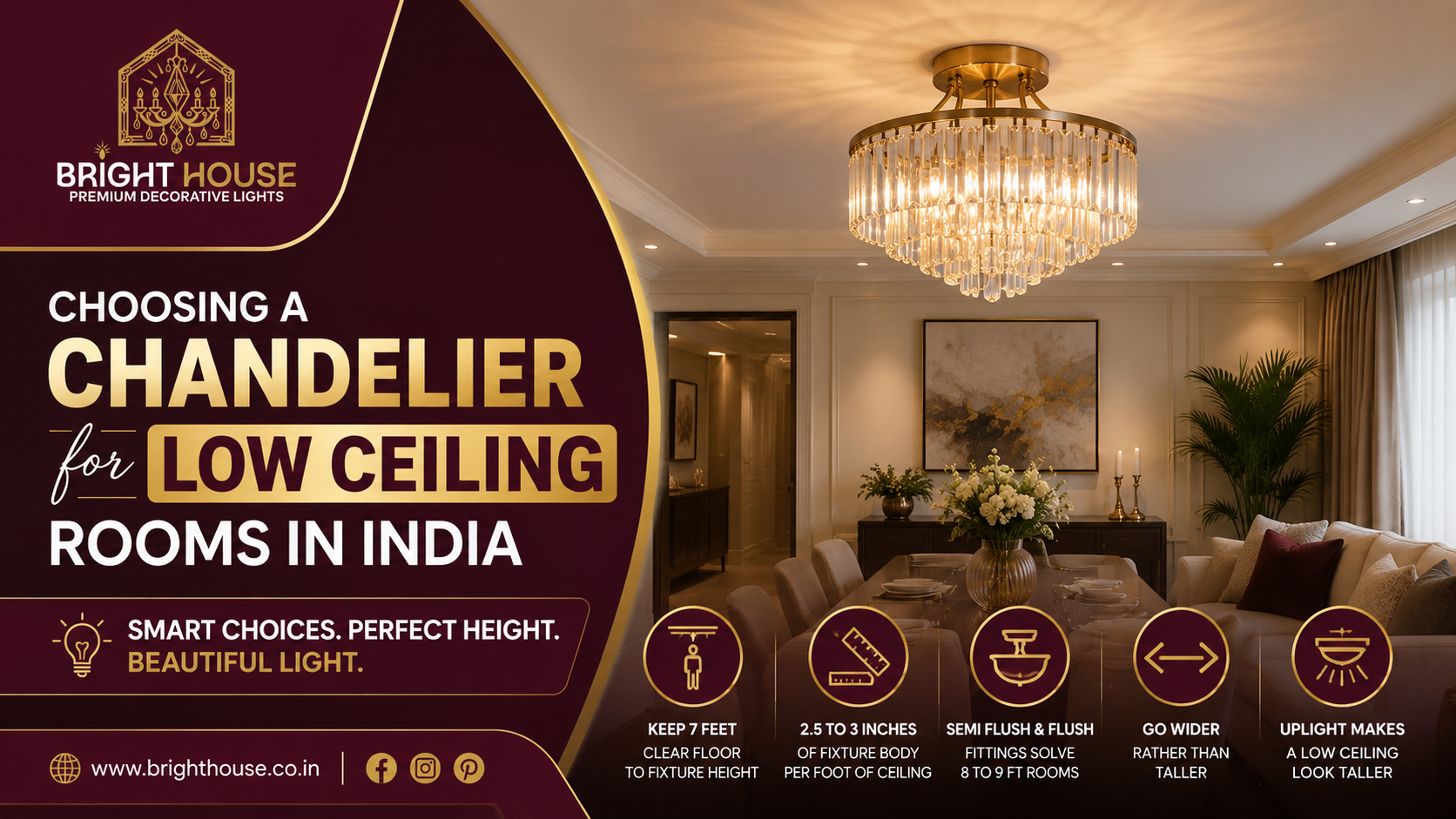
- Check the ceiling height. Allow 7 feet of clearance in any walkway; over a table or bed you can go lower.
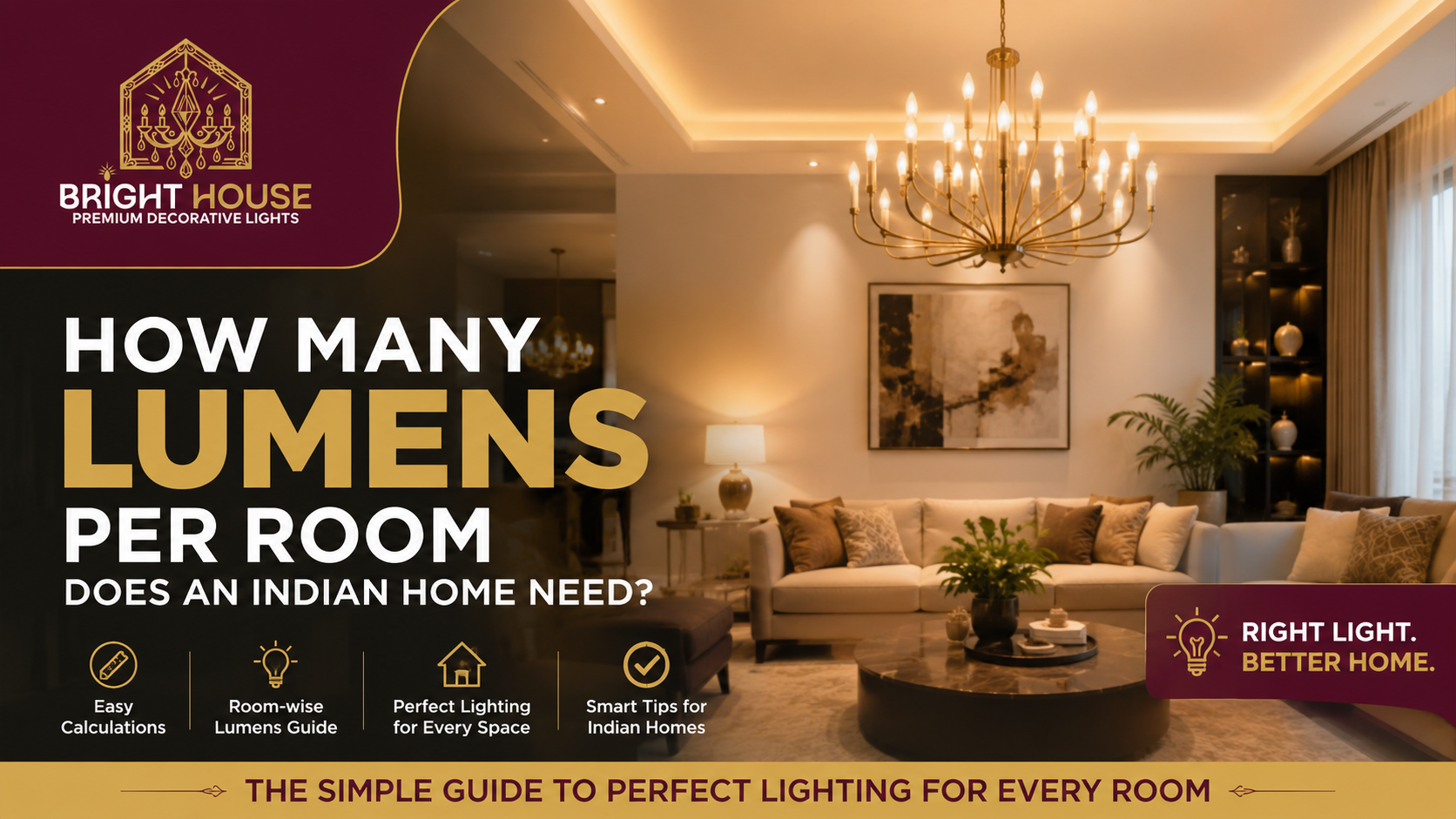
- Count the lumens. Plan 20–25 lumens per sq ft for living areas — a 200 sq ft room needs 4,000–5,000 lumens combined.
- Match the colour temperature. Stay 2700K–3000K for living spaces, and keep every fixture in a room on the same number.
- Check the driver. It should be replaceable — the LEDs will outlast most drivers.
- Verify the CRI. 90 or above for any room where you care how things look. Below 80, skin tones go grey.
- Decide on smart features. Confirm dimming and colour tuning are supported natively or via a compatible wall controller.
- Weigh the fixture. Anything above 5 kg needs a proper concrete anchor, not just the existing hook.
Worth paying for
Three smart features that aren't gimmicks
Tuneable White (CCT)
Shift colour temperature from warm 2700K to neutral 4000K from a remote or app. Warm for evenings, neutral for reading — replacing the need for separate task and ambient fixtures.
Stepless Dimming
A smooth, continuous dim from 100% down to 5%, not three preset levels. Matters most in bedrooms and dining rooms where the mood shifts through the evening.
Memory Function
Remembers the last brightness and colour setting on power-on, so you're not resetting the remote every morning.
Voice control through Alexa or Google Home is available on some models, but for most homes a well-made wall remote with CCT and dimming covers everything.
Indian homes
Installation tips
- Check the wiring. LED drivers are sensitive to voltage swings — fit a stabiliser or choose a driver rated for 140–280V input.
- Earth the fixture. Many older homes have two-wire circuits with no earth. Have an electrician add one before installation.
- Use the correct anchor. Ceiling hooks in Indian flats are rated 3–5 kg — use an expansion bolt into the slab if your fixture exceeds it.
- Keep the driver accessible. It's the part most likely to need replacement after 7–10 years — don't seal it behind the canopy.
- Test at night. Sit in your normal spot after dark and check for glare before tightening the canopy.
Avoid these
Five common mistakes
- Buying on looks alone. A fixture that photographs well under 12-foot showroom ceilings may overwhelm a 9-foot room.
- Ignoring CRI. A CRI of 70 makes a living room look like a hospital corridor — insist on 90+.
- Mixing colour temperatures. A 3000K chandelier next to 4000K wall lights reads as disjointed — match everything.
- Skipping the dimmer. Full brightness is often too much for the evening — use it if the fixture supports it.
- Forgetting the driver warranty. A 2-year warranty means you may be rewiring in year three — look for 5 years or more.
Questions
Frequently asked questions
Are modern LED chandeliers as bright as traditional ones?
Yes, often brighter. A well-designed LED module produces 100–120 lumens per watt versus 15 for an incandescent bulb — a 100W LED chandelier can outperform a 600W traditional one.
Can you replace the LED if it fails?
In most integrated fixtures the LED strip and driver are modular. A qualified electrician can replace the driver; confirm replacement parts are available with the manufacturer.
Do LED chandeliers work with a dimmer switch?
Most do, but only with a compatible LED dimmer — old rotary dimmers built for incandescent bulbs cause flickering or buzzing.
Is a modern LED chandelier safe in a bathroom?
Only with an IP44 rating or higher. Standard fixtures are rated IP20 — fine for dry rooms, not for steam or water spray.
How do I clean a modern LED chandelier?
Switch off, wipe metal and acrylic with a soft damp microfibre cloth. Never spray liquid directly onto the LED strip or driver housing.
What's the best colour temperature?
2700K–3000K (warm white) for living rooms, dining rooms and bedrooms; 3500K–4000K (neutral white) for a home office or study.
Next step
Ready to find the perfect fixture?
A modern LED chandelier is a long-term decision that affects your electricity bill, your maintenance schedule, and the quality of light you live in every evening. Start by measuring your room and ceiling height, then browse the Bright House modern LED chandelier collection and filter by size and style.