Hanging bedside pendant lights solve a problem table lamps cannot: they free up the entire surface of a nightstand for a book, a glass of water and whatever else lands there at night. Done right, they also become the most photographed detail in the room.
Done wrong, a pendant hung too low knocks against pillows, and one hung too high does nothing for reading in bed. This guide walks through the exact measurements and decisions, in order, so you only have to hang the fixture once.
Key Takeaways
- Most bedside pendants hang 24 to 28 inches above the nightstand surface
- Keep the pendant 10 to 12 inches out from the wall or headboard
- Match the drop height on both sides for a symmetrical look, even with different nightstands
- Decide between plug-in and hardwired before you buy, not after
1. Measure Your Nightstand First
Start with the nightstand, not the ceiling. Measure its height from the floor and its depth from the wall, since both numbers decide where the pendant can safely hang without crowding the surface you are trying to free up.
A nightstand under 24 inches tall generally needs a lower pendant drop than a taller one, simply because the reading distance between the bulb and the page changes. Write both measurements down before you start shopping so you are not guessing at the store or scrolling product pages from memory.
2. Set The Drop Height
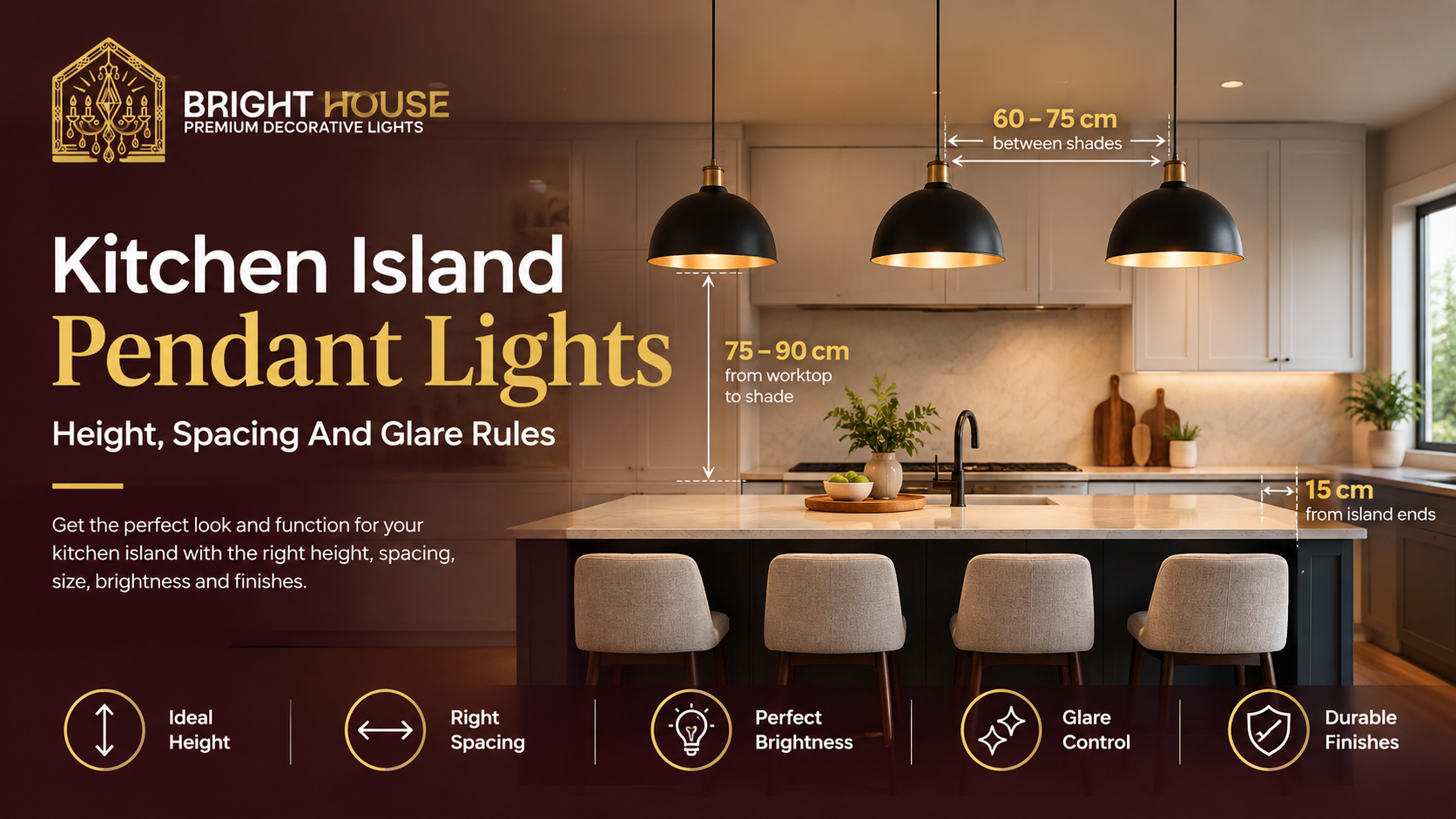
Hang hanging bedside pendant lights so the bottom of the shade sits 24 to 28 inches above the nightstand surface, which keeps the light close enough for reading without putting the fixture at eye level when you sit up.
Getting the pendant light height above nightstand right is the single most important measurement in the whole project. Too high and the light scatters uselessly across the ceiling.
Too low and you will bump the shade every time you reach for a glass of water in the dark. If your nightstand is unusually tall or short, adjust from the 24 to 28 inch range rather than treating it as fixed.
A quick way to test before drilling anything: tie a weight to a length of string at your planned drop height and live with it for a night or two.
3. Get The Wall Spacing Right
Position the pendant roughly 10 to 12 inches out from the wall or headboard, which keeps the cord or rod from looking cramped against the wall while still sitting close enough to feel intentional rather than randomly placed.
Pendants hung directly against the wall tend to cast an uneven shadow up the wallpaper or paint, which is rarely the effect anyone wants above a bed. A small gap lets the light spread more evenly across the headboard and pillows.
4. Decide: Plug-In Or Hardwired
Choose a plug-in pendant if you want to install it yourself this weekend, and choose a hardwired pendant if you want the cord fully hidden and are comfortable calling an electrician. Both are common choices for hanging bedside pendant lights, and neither is the objectively better option.
Electrical safety guidance is consistent on one point: any work that involves cutting into the ceiling or running new wiring should go to a licensed electrician rather than a DIY attempt, even for a fixture as small as a bedside pendant.
A plug-in pendant sidesteps this entirely, at the cost of a visible cord running up the wall. Most people find a cord clip or a cord cover solves the visual problem without needing to call anyone in.
One Pendant Or A Pair?
A pair of matching pendants, one on each side of the bed, is the more common choice and reads as more deliberate than a single fixture on one side only. It also solves the practical problem of needing light on both sides of the bed rather than just one.
That said, a single statement pendant works well over a daybed, a single sleeper’s nightstand, or a reading nook that only needs light from one direction.
If you do choose a pair, keep both fixtures identical in style, size and drop height. Two hanging bedside pendant lights that do not match almost always read as a mistake rather than a design choice, even when each pendant is beautiful on its own.
Bedside Pendant Lights Vs Table Lamps: Which Should You Choose?
Choose hanging bedside pendant lights when nightstand space is tight or you want a more architectural look, and choose table lamps when you want the flexibility to move, dim or swap the light without touching the ceiling or wall.
|
Factor |
Hanging pendant lights |
Table lamps |
|
Nightstand space |
Frees up the full surface |
Takes up a portion of the surface |
|
Flexibility |
Fixed once installed |
Easy to move, replace or upgrade |
|
Installation |
Requires ceiling or wall mounting |
Plug in and go |
|
Visual impact |
Reads as a built-in design feature |
Reads as a furnishing piece |
|
Best for |
Small nightstands, styled bedrooms |
Renters, frequently rearranged rooms |
Neither option is wrong. A lot of well-designed bedrooms actually use both, with a pendant for ambient light and a small lamp for close task lighting.
What Styles Of Pendant Lights Work Well For A Bedroom?
Pendant lights for bedroom use tend to fall into a handful of reliable categories, each suited to a different overall look in the room.
- Glass globe pendants: soft, diffused light that suits most bedroom styles without competing with other decor
- Fabric shade pendants: warmer, more muted light, a common choice for traditional or transitional bedrooms
- Brass or metal cage pendants: more industrial or vintage in feel, often paired with exposed bulbs
- Woven or rattan pendants: textured, casual, and well suited to warmer, more relaxed bedroom palettes
If you already have a chandelier or ceiling fixture elsewhere in the room, choose a bedside pendant that shares at least one material or finish with it, so the two fixtures read as part of the same scheme rather than two unrelated purchases.
Installation And Safety: What To Check Before You Hang One
Confirm your ceiling or wall can support the fixture’s weight, and confirm the electrical box, if hardwiring, is rated for a pendant fixture before any cutting or drilling begins. Skipping this step is the most common reason installations need to be redone.
- Confirm the mounting point can bear the fixture’s weight
- Turn off power at the breaker before touching any wiring
- Use a junction box rated for the fixture if hardwiring
- Test the pendant’s height with painter’s tape before committing to the final mount
- Hire a licensed electrician for any hardwired installation
Common Mistakes To Avoid
Most problems with hanging bedside pendant lights trace back to skipping the test-fit step rather than a bad style choice, so a little patience before drilling saves a second trip to the hardware store.
- Buying the pendant before measuring the nightstand: the shade can end up too wide for a narrow surface, or too small to feel intentional on a large one
- Choosing two different pendant styles for a pair: even similar finishes from different product lines rarely match once they are side by side
- Skipping the string test: a weighted string at the planned drop height for a night or two catches problems no tape measure will
- Forgetting the bulb’s colour temperature: a cool white bulb next to a bed reads as clinical rather than restful, so stay warm, around 2700K
If your nightstands are especially narrow and even a compact pendant feels crowded, a slim wall light mounted at the same height can achieve a similar look without hanging from the ceiling at all.
Frequently Asked Questions
How low should hanging bedside pendant lights hang?
Most bedside pendants hang 24 to 28 inches above the nightstand surface. Adjust slightly based on your nightstand’s height and how close you like to sit while reading.
Can I use pendant lights instead of lamps in a small bedroom?
Yes. Hanging bedside pendant lights are often the better choice in a small bedroom, since they free up nightstand space that a lamp would otherwise take up.
Do bedside pendants need a dimmer?
Not strictly, but most people prefer one. A dimmer lets you move from bright reading light to a low glow without switching fixtures.
Are plug-in pendant lights safe for bedrooms?
Yes, when installed correctly with an undamaged cord and a stable mounting point. They avoid the need for any ceiling wiring work.
Can hanging bedside pendant lights be too bright for reading in bed?
Yes, if the bulb is too high in wattage or too cool in colour temperature. A warm, dimmable bulb around 40 to 60 watts equivalent usually reads as comfortable.
What is the ideal pendant size for a narrow nightstand?
A smaller shade, generally under 8 inches in diameter, suits a narrow nightstand better and avoids crowding whatever else sits on the surface.
What Should You Do Next?
Measure your nightstand and mark the 24 to 28 inch drop range on the wall before you buy anything, since that single measurement rules out most of the wrong options. From there, browse Bright House’s pendant lights collection to compare glass, fabric and metal styles side by side.
If your bedroom already has a chandelier or another statement fixture, our guide to choosing the right chandelier covers the same sizing logic in more detail, and hanging bedside pendant lights that echo the same finish will tie the whole room together.