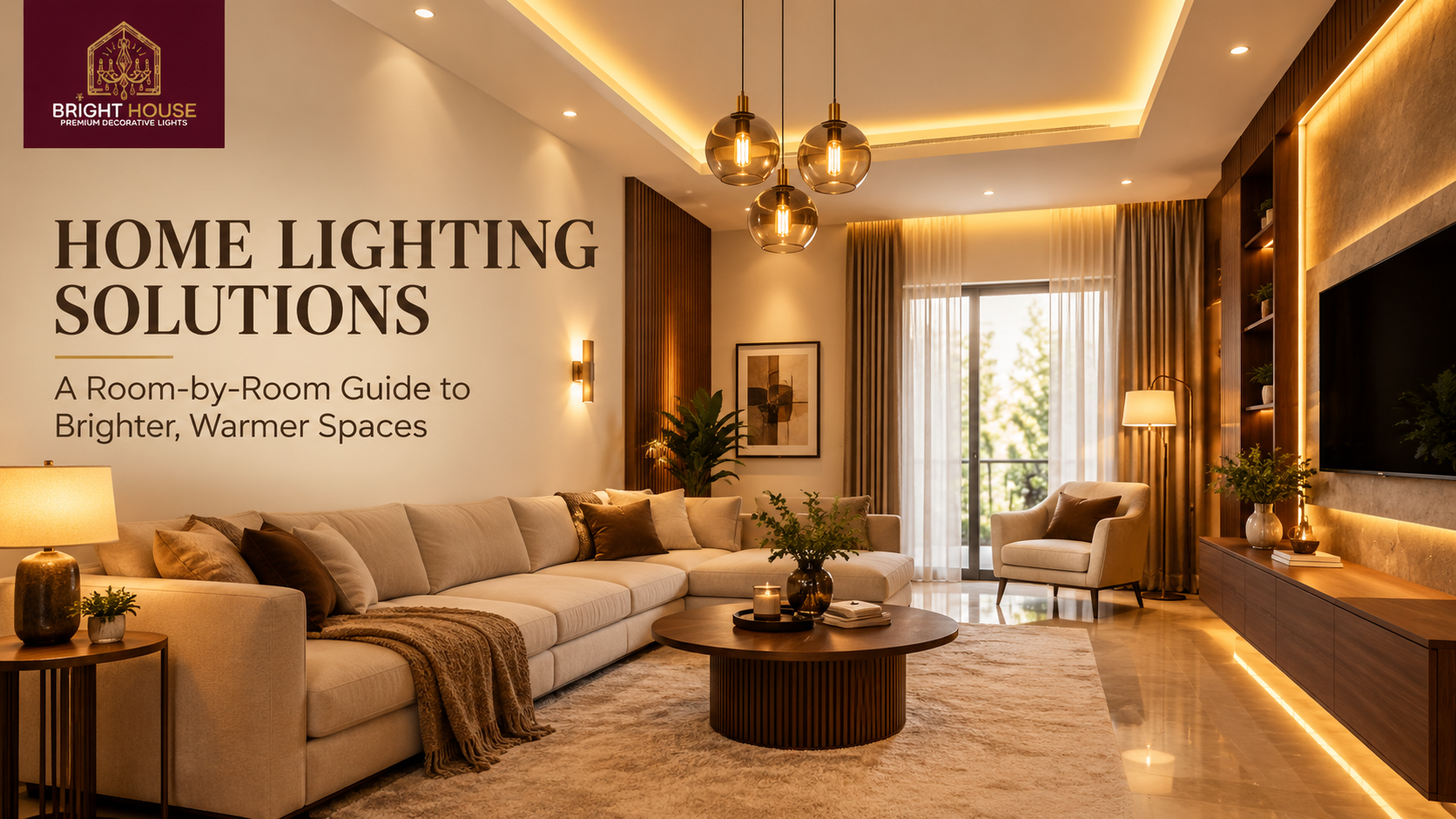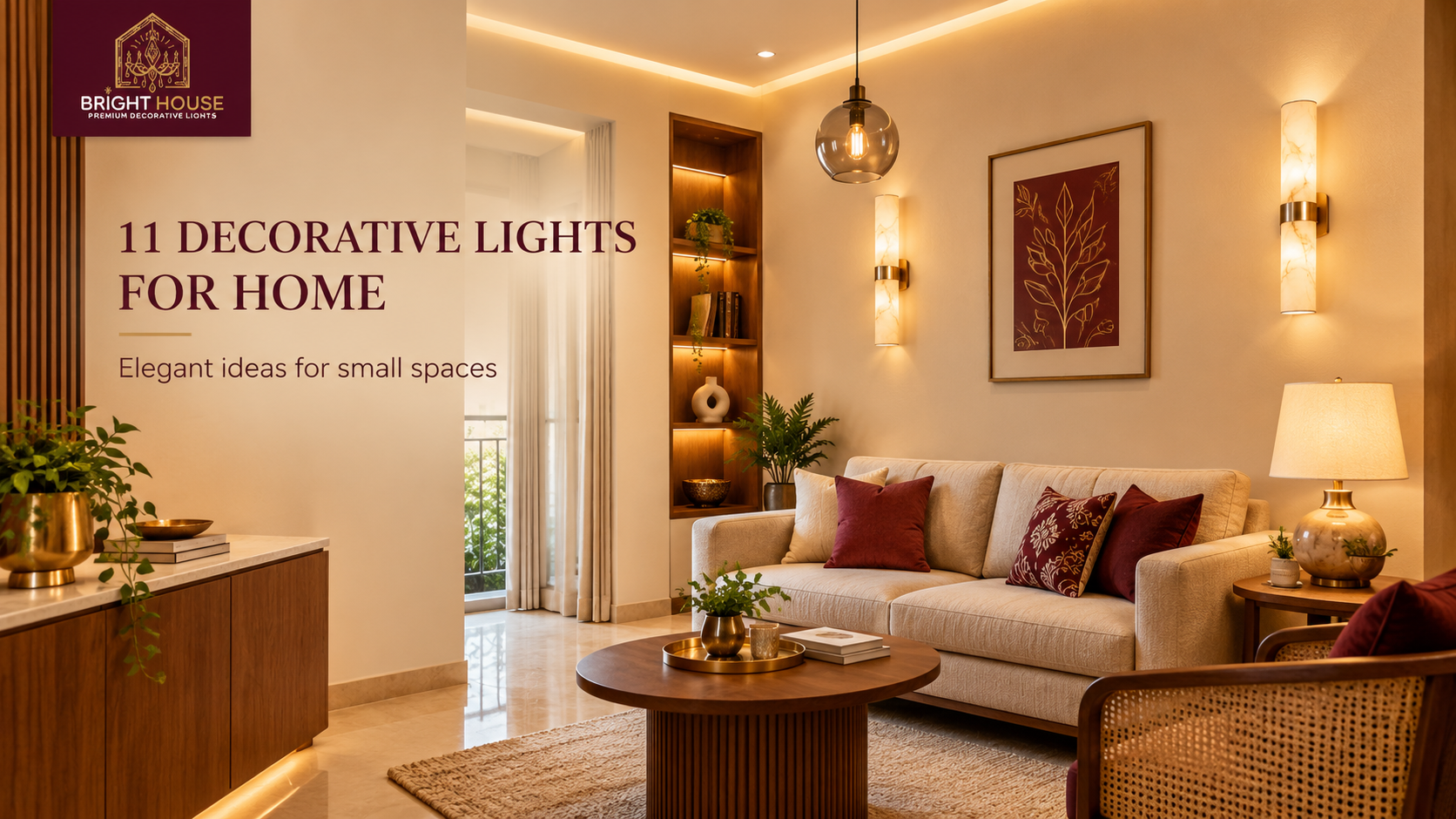
A home is more than its furniture, wall colours and decorative accessories. The way a room feels after sunset depends greatly on how it is illuminated. A living room can feel warm and welcoming, a bedroom can become a relaxing retreat, and a simple dining area can look elegant with the right lighting arrangement.
Decorative lights for home do more than brighten a room. They influence its atmosphere, highlight interior details, create visual depth and help each space express a distinct personality.
Whether you live in a compact apartment, a modern villa or a traditional Indian home, choosing suitable decorative lighting can change the appearance of your interiors without requiring a complete renovation.
At Bright House, we believe good lighting should balance beauty, comfort and everyday functionality. This guide explores how decorative lighting changes the way your home feels and how you can select the right fixtures for every room.
What Are Decorative Lights for Home and Why Do They Matter?
Decorative lights for home are lighting fixtures selected for both their illumination and their visual appeal. They include chandeliers, pendant lights, wall sconces, table lamps, floor lamps and decorative LED installations.
Unlike a basic light that serves only to illuminate a room, decorative lighting also contributes to the interior design. The shape of a pendant, the finish of a wall light or the softness of a lampshade can influence how the surrounding space looks and feels.
Here is why decorative lighting matters:
-
Creates atmosphere: Warm, diffused light can make a room feel comfortable and relaxing.
-
Adds personality: Distinctive fixtures reflect modern, traditional, minimalist or luxurious design preferences.
-
Highlights interiors: Carefully positioned lighting draws attention to artwork, textured walls, furniture and architectural details.
-
Improves visual depth: Multiple light sources reduce the flat appearance created by a single overhead fixture.
-
Supports daily activities: Reading lamps, bedside lights and dining pendants provide illumination where it is needed.
The best results come from selecting lights according to the room's purpose, size, furniture and existing interior design.
How Does Decorative Lighting Change the Mood of a Room?
Decorative lighting changes a room's mood by controlling the warmth, direction, intensity and distribution of light. Soft lighting creates a more relaxed atmosphere, while brighter, evenly distributed illumination supports everyday activities.
Think about how a restaurant feels different from a brightly lit office. The furniture might be attractive in both spaces, but the lighting changes the experience.
Your home works in a similar way. A combination of ceiling lights, wall lights and lamps gives you more control over the atmosphere than a single bright bulb.
For example:
-
Warm light in a bedroom can make the space feel peaceful at night.
-
Pendant lights above a dining table can create an intimate setting for meals.
-
Wall lights beside artwork can make a living room feel more thoughtfully designed.
-
A floor lamp beside a sofa can turn an unused corner into a comfortable reading area.
Colour temperature also matters. As a practical starting point, warm white light around 2700K to 3000K often suits living rooms and bedrooms. Neutral white around 3000K to 4000K may work better in kitchens, study areas and spaces where clear visibility is important. The best choice depends on the room, finishes and personal preference.
Which Decorative Lights Make a Living Room Feel More Elegant?
Living room decorative lights look most effective when they combine a main light source with softer illumination at different heights. Chandeliers, pendant lights, wall sconces and floor lamps each contribute a different visual effect.
The living room is often the centre of family life and the first space visitors see. Lighting should therefore support everyday comfort while making the interior attractive.
Consider these options:
1. Chandeliers for a statement look
A chandelier creates a focal point and works particularly well in spacious living rooms, foyers and areas with suitable ceiling height. Choose a size that complements the room instead of overwhelming it.
2. Pendant lights for a modern finish
Pendant fixtures can add character to a defined seating area or an open-plan living space. Their shape and material can complement wooden furniture, marble finishes or contemporary interiors.
3. Wall lights for visual depth
Wall sconces distribute light across vertical surfaces, making plain walls more interesting. They can frame a mirror, highlight a feature wall or brighten darker corners.
4. Floor lamps for cosy corners
A floor lamp beside a sofa or accent chair adds a lower layer of light. It is also a practical way to improve a corner without installing another ceiling fixture.
5. Concealed LED lighting for subtle details
LED strips in suitable ceiling coves, shelves and display niches create a gentle architectural glow. The light source should be positioned carefully to avoid visible dots and unwanted glare.
For more inspiration, explore Bright House's living room lighting ideas for Indian homes.
How Can Bedroom Decorative Lights Create a Relaxing Atmosphere?
Bedroom decorative lights create a relaxing atmosphere when they provide comfortable illumination without excessive brightness or glare. Bedside wall lights, table lamps and dimmable ceiling fixtures are useful options for creating a flexible bedroom environment.
The bedroom serves several purposes. It is where you rest, read, prepare for the day and sometimes work. Your lighting should adapt to these activities.
Try the following ideas:
-
Install wall lights on either side of the bed to reduce dependence on a single ceiling fixture.
-
Use table lamps for gentle evening illumination.
-
Choose a decorative pendant where ceiling height and bed placement allow it.
-
Consider dimmable lighting for greater control over brightness.
-
Select shades that soften the light instead of exposing an uncomfortable bright source.
For smaller bedrooms, wall-mounted fixtures can free up bedside table space. In larger rooms, a combination of ceiling lighting and low-level lamps can create a more balanced appearance.
Remember that decorative lighting should not compromise practical needs. Reading areas require sufficient light, while walkways and wardrobe spaces need adequate visibility.
How Do Decorative Lights Make Small Homes Look Bigger?
Decorative lighting can make small homes feel more spacious by spreading illumination across walls, corners and different heights. Wall sconces, compact pendants and slim LED strips help create visual depth without occupying much floor space.
In compact Indian apartments, every design decision matters. An oversized chandelier may dominate a small room, while a single ceiling bulb can leave corners dark and make the space feel flat.
Use these techniques instead:
-
Choose appropriately sized fixtures. Compact pendants and flush-mounted ceiling lights are often more suitable for low ceilings.
-
Light the walls. Wall sconces and carefully directed lights draw the eye across the room.
-
Illuminate dark corners. A slim floor lamp or wall fixture can make an underused area feel intentional.
-
Use mirrors thoughtfully. Position lighting so that mirrors reflect useful light without causing glare.
-
Keep the design consistent. Repeating similar finishes and colour temperatures helps the space feel coordinated.
Avoid filling every available area with decorative fixtures. A few well-placed lights generally create a cleaner result than too many competing designs.
Which Decorative Lights Work Best in Different Rooms?
The right fixture depends on how the room is used, its dimensions and the atmosphere you want to create. A statement pendant might suit a dining area, while a wall sconce could be more useful beside a bed.
| Room | Suitable decorative lights | Desired effect |
|---|---|---|
| Living room | Chandeliers, pendants, wall lights and floor lamps | Welcoming and elegant |
| Bedroom | Bedside lamps, wall sconces and dimmable ceiling lights | Calm and comfortable |
| Dining room | Pendant lights or a chandelier | Warm and inviting |
| Kitchen | Decorative pendants with practical task lighting | Stylish and functional |
| Entrance or foyer | Compact chandelier or wall lights | Attractive first impression |
| Staircase | Wall lights and suitable step lighting | Visual interest and safer movement |
| Balcony | Outdoor-rated wall lights and decorative fixtures | Relaxed evening atmosphere |
| Study area | Desk lamps with suitable general lighting | Focus and visibility |
This table is a starting point rather than a fixed rule. Ceiling height, electrical points, furniture placement and the amount of natural light should influence the final choice.
How Does Light Colour Affect the Look of Interior Materials?
Light colour changes how wall paint, wood, marble, metal, fabric and other interior finishes appear. Warm light can emphasise the richness of wood and brass, while neutral light may reveal detail more clearly in work areas.
For example, a beige wall can look warmer under warm white illumination. A polished metallic fixture may create stronger reflections than a fabric shade. Textured stone or decorative panelling can become more noticeable when light falls across the surface at an angle.
When choosing decorative lights for home interiors, consider these factors:
-
Wall colour: Test the lighting against your actual paint shade.
-
Furniture finish: Coordinate the fixture with wood, glass, metal and upholstery.
-
Shade material: Frosted glass and fabric can soften direct light.
-
Colour temperature: Avoid mixing noticeably different white tones in the same visual area unless the contrast is intentional.
-
Colour rendering: A good colour rendering index (CRI) helps reveal colours more naturally.
Whenever possible, view the fixture or its light output in a similar environment before making a final decision.
What Is Layered Lighting and How Can You Use It at Home?
Layered lighting combines different types of illumination so a room can remain functional while also feeling attractive and comfortable. The main layers are ambient, task and accent lighting, supported by decorative fixtures that contribute style.
Ambient lighting provides general illumination. Ceiling lights, chandeliers and downlights commonly serve this purpose.
Task lighting directs light towards an activity. Examples include reading lamps, desk lights and under-cabinet kitchen lighting.
Accent lighting highlights specific features. Spotlights, wall washers and selected LED installations can emphasise artwork, display shelves or textured walls.
Decorative lighting can work across all three layers. A pendant might provide general or focused light while acting as a design feature, and a wall sconce can provide useful illumination while adding character.
To create a balanced arrangement:
-
Identify the main activities performed in the room.
-
Choose a suitable primary light source.
-
Add task lighting wherever focused visibility is needed.
-
Introduce accent lighting only where you want to highlight a feature.
-
Use separate switches or compatible dimmers to control the layers independently.
For a more detailed planning approach, read Bright House's guide to creating a home lighting plan before interior work begins.
How Can You Choose Decorative Lights That Match Your Interior Style?
Choose decorative lights that complement the room's furniture, finishes, proportions and overall design rather than selecting a fixture based on appearance alone.
Different interior styles call for different approaches.
-
Modern interiors: Simple geometric pendants, clean-lined wall lights and understated finishes.
-
Minimalist homes: Compact fixtures, restrained colours and uncluttered designs.
-
Luxury interiors: Statement chandeliers, carefully selected metallic finishes and layered lighting.
-
Traditional interiors: Decorative glass, classic silhouettes and finishes that complement existing furniture.
-
Natural or earthy interiors: Warm lighting paired with wood, stone and textured materials.
Try to repeat one or two finishes across the room. For example, a brass pendant can coordinate with brass wall lights or furniture hardware. This creates a connection between different fixtures without making every item identical.
Also consider maintenance. Intricate chandeliers may need more frequent cleaning than simple glass or metal fixtures, especially in dusty environments.
What Should You Check Before Buying Decorative Lights for Home?
Before purchasing, check the fixture's dimensions, light output, colour temperature, electrical compatibility, installation requirements and suitability for its intended location.
A beautiful light can disappoint if it is too large, too dim or difficult to install.
Use this checklist:
-
Measure the room and available ceiling height.
-
Check the fixture's width, height and hanging length.
-
Confirm the required brightness for the activity.
-
Choose an appropriate colour temperature.
-
Verify whether the fixture requires a separate bulb, driver or compatible dimmer.
-
Confirm that the electrical point can support the intended installation.
-
Check the product's warranty, cleaning requirements and installation instructions.
-
For balconies or outdoor areas, confirm the fixture's outdoor rating and protection against moisture.
-
Have fixed wiring and installation work completed by a qualified electrician.
Energy efficiency is another important consideration. LEDs are available in many decorative designs and can provide useful illumination with relatively low energy consumption. The US Department of Energy explains the benefits and characteristics of LED lighting.
Avoid choosing a fixture on price alone. Compare its design, materials, light output, suitability and long-term maintenance requirements.
How Can You Upgrade Your Home Lighting Without a Major Renovation?
You can improve the atmosphere of your home by changing a few key fixtures and adding light at different heights instead of redesigning the entire interior.
Start with the room that feels least comfortable in the evening. A living room may benefit from a floor lamp and wall lighting, while a bedroom might need softer bedside illumination.
Follow this simple plan:
-
Replace a harsh or unsuitable main fixture if necessary.
-
Add a table lamp, floor lamp or wall light to introduce a second lighting level.
-
Use a suitable LED strip to highlight an existing shelf or niche where installation allows.
-
Coordinate colour temperature across the room.
-
Review the result after dark and adjust fixture positions or brightness where possible.
Portable lamps are especially useful because they allow you to experiment before committing to fixed electrical work. If you are renovating, plan wiring points and switching arrangements before the walls and ceiling are finished.
Conclusion:
Decorative lighting influences how a home looks, feels and functions. It can make a living room more welcoming, a bedroom more relaxing, a dining area more intimate and a compact apartment feel visually balanced.
The secret is not to install the maximum number of lights. It is to choose the right fixtures, distribute illumination thoughtfully and make sure every light has a purpose.
From elegant chandeliers and modern pendant lights to practical wall sconces and subtle LED accents, the right combination can bring your interior design together.
Explore the lighting options at Bright House to find fixtures that complement your home, suit your needs and help you create a space that feels right every day.
Frequently Asked Questions
1. Which decorative lights are best for home interiors?
Chandeliers, pendant lights, wall sconces, table lamps and floor lamps are popular choices. The best option depends on room size, ceiling height, interior style and the purpose of the light.
2. Do decorative lights make a home look more luxurious?
Yes. Well-selected decorative lights can highlight finishes, create visual depth and establish a focal point. Coordinating fixtures with furniture and using layered lighting can make an interior look more polished.
3. Which colour of light is best for bedrooms?
Warm white light around 2700K to 3000K is a practical starting point for bedrooms because it creates a softer atmosphere. Individual preferences and the room's colours should also guide the choice.
4. How can I decorate a small living room with lights?
Use compact ceiling fixtures, wall sconces, table lamps and carefully positioned LED accents. Spread light across different heights, avoid oversized fixtures and keep the overall design coordinated.
5. Are LED decorative lights suitable for everyday use?
Yes. Suitable LED fixtures can provide energy-efficient illumination for everyday living. Check the light output, colour temperature, electrical compatibility and product specifications before buying.