Choosing a light is about more than brightness, size and design. The light fixture finish can influence how your entire interior feels. A warm brass pendant can make a dining room feel sophisticated, while a matte black chandelier can create a stronger contemporary statement. Gold finishes can add luxury, while chrome can introduce a clean and polished appearance.
The right finish should work with your furniture, wall colours, flooring, hardware and other decorative elements. It should also complement the shape and material of the fixture itself.
For homeowners planning a new interior, renovating a room or simply replacing an old ceiling light, understanding lighting fixture finishes makes it easier to create a coordinated look.
Bright House offers decorative lighting across categories including chandeliers, pendant lights, wall lights, table lamps and floor lamps, with options designed for living rooms, bedrooms, dining rooms and other spaces.
This guide explains how to choose the right finish without making your interior look mismatched or over-designed.
What Is a Light Fixture Finish?
A light fixture finish is the visible surface treatment or colour applied to the metal or other exposed material of a lighting fixture.
Common finishes include:
- Brass
- Antique brass
- Gold
- Brushed gold
- Matte black
- Chrome
- Nickel
- Bronze
- Copper
- Black and gold combinations
- Brass and glass combinations
The finish affects the visual character of a fixture even when the shape remains exactly the same.
For example, a simple pendant can look traditional in antique brass, contemporary in matte black, luxurious in gold or minimal in brushed nickel.
This is why the finish should be considered alongside the fixture design rather than treated as an afterthought.
How Do You Choose the Right Light Fixture Finish?
The easiest way to choose the right finish is to look at the existing visual elements in the room before selecting the light.
Consider these five factors:
- Interior style
- Existing metal finishes
- Wall and furniture colours
- Room size and natural light
- Mood you want to create
A good finish should complement the room rather than compete with its most important features.
For example, warm finishes such as brass and gold can work particularly well with wood, beige, cream, marble and warm neutral interiors. Dark finishes such as black or charcoal can create contrast against lighter walls and furniture.
Bright House's lighting range also includes fixtures using brass, crystal and hand-blown glass, along with customizable finishes, sizes and configurations.
Which Light Fixture Finish Works Best With Different Interior Styles?
Different interior styles naturally pair with different finishes.
| Interior style | Recommended finishes | Overall effect |
|---|---|---|
| Modern | Matte black, brushed metal | Clean and contemporary |
| Modern luxury | Gold, brass, black and gold | Premium and sophisticated |
| Classic | Brass, antique gold, bronze | Traditional and elegant |
| Minimalist | Brushed metal, black, soft gold | Simple and refined |
| Industrial | Matte black, iron, dark bronze | Strong and architectural |
| Contemporary | Brass, gold, black, chrome | Stylish and versatile |
| Natural | Brass, bronze, wood tones | Warm and organic |
| Glamorous | Gold, polished brass, crystal | Luxurious and decorative |
There is no single finish that is correct for every home. The best choice depends on the relationship between the lighting and the rest of the interior.
Is Brass Lighting a Good Choice for Modern Interiors?
Yes. Brass lighting can work exceptionally well in both classic and modern interiors.
Brass introduces warmth without necessarily looking traditional. A simple brass pendant with a clean geometric shape can look very contemporary, while an ornate brass chandelier can create a classic appearance.
Brass works particularly well with:
- Wooden furniture
- Marble surfaces
- Beige walls
- Cream upholstery
- Neutral interiors
- Warm white lighting
- Luxury contemporary interiors
If your home already has brass handles, cabinet hardware or decorative details, repeating the same visual warmth in your lighting can make the room feel more coordinated.
For additional inspiration, explore Bright House's chandelier collection for statement lighting options. The Bright House website lists chandeliers among its primary lighting categories.
When Should You Choose Gold Light Fixtures?
Choose gold light fixtures when you want lighting to become a noticeable decorative feature.
Gold can work particularly well in:
- Luxury living rooms
- Dining rooms
- Bedrooms
- Entryways
- Double-height spaces
- Boutique-style interiors
Gold does not have to mean an overly bright or shiny appearance. Brushed, antique and softer gold finishes can create a more sophisticated result.
If your room already contains several strong gold elements, however, adding too many highly reflective gold surfaces may make the space feel visually busy.
A better approach is to use gold as an accent and allow other materials such as glass, stone, wood or fabric to balance it.
Is Matte Black Lighting Better for Modern Homes?
Matte black lighting is an excellent choice when you want contrast and a contemporary appearance.
Black fixtures can visually define a room, particularly when used against white, beige, cream or light-coloured walls.
Matte black lighting works well for:
- Modern apartments
- Contemporary villas
- Industrial interiors
- Minimalist spaces
- Modern dining rooms
- Home offices
Matte black also pairs naturally with clear glass, smoked glass, white shades and warm lighting.
However, the fixture's size is important. A large dark chandelier can visually dominate a small room. In compact spaces, consider a slimmer pendant, wall light or semi-flush fixture.
Bright House's range includes black and gold combinations as well as black metal and glass designs, showing how darker finishes can be combined with warmer accents.
When Does Chrome or Nickel Lighting Work Best?
Chrome and nickel finishes create a cleaner, more reflective appearance.
They can work well when your interior already contains:
- Stainless steel appliances
- Chrome bathroom fittings
- Silver hardware
- Cool-toned furniture
- Grey walls
- Contemporary glass elements
Chrome is particularly suitable when you want the lighting to feel crisp and polished rather than warm and decorative.
However, if the room is dominated by warm wood, beige tones and brass hardware, a very cool chrome fixture may feel disconnected.
The goal is not to match every item exactly. Instead, look for a visual relationship between the fixture and the rest of the room.
Can You Mix Different Light Fixture Finishes?
Yes. Mixing finishes can make an interior look more layered and professionally designed when done intentionally.
For example:
Brass + black:
A strong combination for modern luxury interiors.
Gold + glass:
Creates a lighter and more glamorous appearance.
Black + chrome:
Works well in contemporary and industrial spaces.
Brass + wood:
Creates warmth and works particularly well in residential interiors.
The important rule is to avoid introducing too many unrelated finishes.
A practical approach is to select one dominant finish and one supporting finish.
For example:
Dominant finish: Brass
Supporting finish: Matte black
The brass provides warmth, while black adds contrast.
Bright House's recent lighting guidance also highlights warm metals such as aged brass and brushed gold alongside charcoal and iron as contemporary finish directions.
Should All the Light Fixtures in a Home Have the Same Finish?
No. Your entire home does not need to use one identical finish.
Instead, aim for visual consistency.
For example, a home could use:
- Brass chandelier in the living room
- Brass and black pendant in the dining room
- Black wall lights in the bedroom
- Brass table lamps in the study
These fixtures do not have to be identical. Repeating related finishes helps create continuity between rooms.
The same principle applies to door handles, cabinet handles, taps and other hardware.
If your home already has several visible metal finishes, choose lighting that connects at least one of those finishes.
How Does Wall Colour Affect Your Lighting Finish?
Wall colour can significantly change how a lighting finish looks.
Light walls
White, cream and beige walls provide a neutral background for almost any fixture finish.
Black creates strong contrast, while brass and gold create warmth.
Dark walls
Gold, brass and lighter metal finishes can stand out beautifully against dark walls.
Black fixtures can also work, but they may visually disappear unless there is sufficient contrast.
Grey walls
Grey can work with both warm and cool finishes.
Brass and gold introduce warmth, while chrome and nickel maintain a cooler contemporary appearance.
Earthy colours
Terracotta, olive, brown and natural shades generally pair well with brass, bronze, black and other warm finishes.
Which Finish Should You Choose for Each Room?
The room's function should also influence your choice.
| Room | Recommended finishes | Why |
|---|---|---|
| Living room | Brass, gold, black, glass | Creates a strong focal point |
| Dining room | Brass, gold, black, glass | Adds warmth and ambience |
| Bedroom | Brass, soft gold, black, bronze | Creates a comfortable atmosphere |
| Kitchen | Black, brass, chrome | Practical and contemporary |
| Foyer | Gold, brass, black | Makes a strong first impression |
| Home office | Black, bronze, brushed metal | Clean and focused appearance |
| Staircase | Black, brass, gold | Adds architectural character |
The finish should always be considered together with the fixture's size, shape and light distribution.
For example, a gold finish may be beautiful in a dining room, but an oversized gold chandelier could still be unsuitable if the ceiling height and dining table proportions are wrong.
How Does Natural Light Affect a Fixture Finish?
Natural daylight can change how a finish appears throughout the day.
A highly reflective finish such as polished chrome or bright gold can catch sunlight and become a visual highlight. Matte finishes tend to create a quieter appearance.
Before choosing your fixture, observe the room at different times of the day.
Ask:
- Does the room receive direct sunlight?
- Is the room naturally bright or dark?
- Are the walls light or dark?
- Will the fixture be visible from windows?
- Does the finish reflect other colours in the room?
This simple check can prevent surprises after installation.
What Should You Match Your Lighting Finish With?
You do not need to match your light fixture to everything in the room. Instead, identify two or three existing elements that can visually connect with the fixture.
Good elements to compare include:
- Door handles
- Cabinet hardware
- Curtain rods
- Furniture details
- Faucets
- Decorative accessories
- Mirrors
- Metal frames
- Wall décor
For example, if your dining room has brass cabinet handles and a brass-framed mirror, a brass pendant can reinforce the design without requiring every object to be brass.
What Are the Most Common Mistakes When Choosing a Fixture Finish?
Avoid these common mistakes:
1. Choosing the finish before considering the room
A beautiful fixture can look wrong if its finish conflicts with the interior.
2. Using too many metals
Three or four unrelated finishes can make a room look unplanned.
3. Ignoring existing hardware
Visible door handles and cabinet hardware are important visual references.
4. Choosing a finish only because it is trending
Trends change. Choose something that works with your home's architecture and furniture.
5. Forgetting the fixture shape
Finish cannot compensate for the wrong size or shape.
6. Ignoring lighting colour
A warm finish combined with extremely cool light can create a different mood than expected.
For living spaces, Bright House recommends warm white lighting in the 2700K to 3000K range as a comfortable starting point.
What Is the Best Way to Select a Light Fixture Finish Before Buying?
Use this simple checklist:
Step 1: Identify your interior style.
Step 2: List the dominant colours in the room.
Step 3: Check your existing metal hardware.
Step 4: Decide whether the fixture should blend in or become a focal point.
Step 5: Choose one dominant finish.
Step 6: Add a complementary finish only if necessary.
Step 7: Consider the fixture's size and shape.
Step 8: Check the colour temperature of the light.
Step 9: Look at the finish under your room's actual lighting.
Step 10: Make sure the fixture works with the overall interior, not just by itself.
How Can Bright House Help You Choose the Right Lighting?
Choosing the right lighting involves more than selecting a beautiful product. The fixture should suit the room, ceiling height, furniture arrangement, interior style and desired ambience.
Bright House offers chandeliers, pendant lights, wall lights, table lamps and floor lamps for different residential and commercial spaces. The company also states that its fixtures are available with different finishes, sizes and configurations, with complimentary expert consultation available.
You can explore Bright House pendant lights for dining rooms, bedrooms, living areas and other spaces.
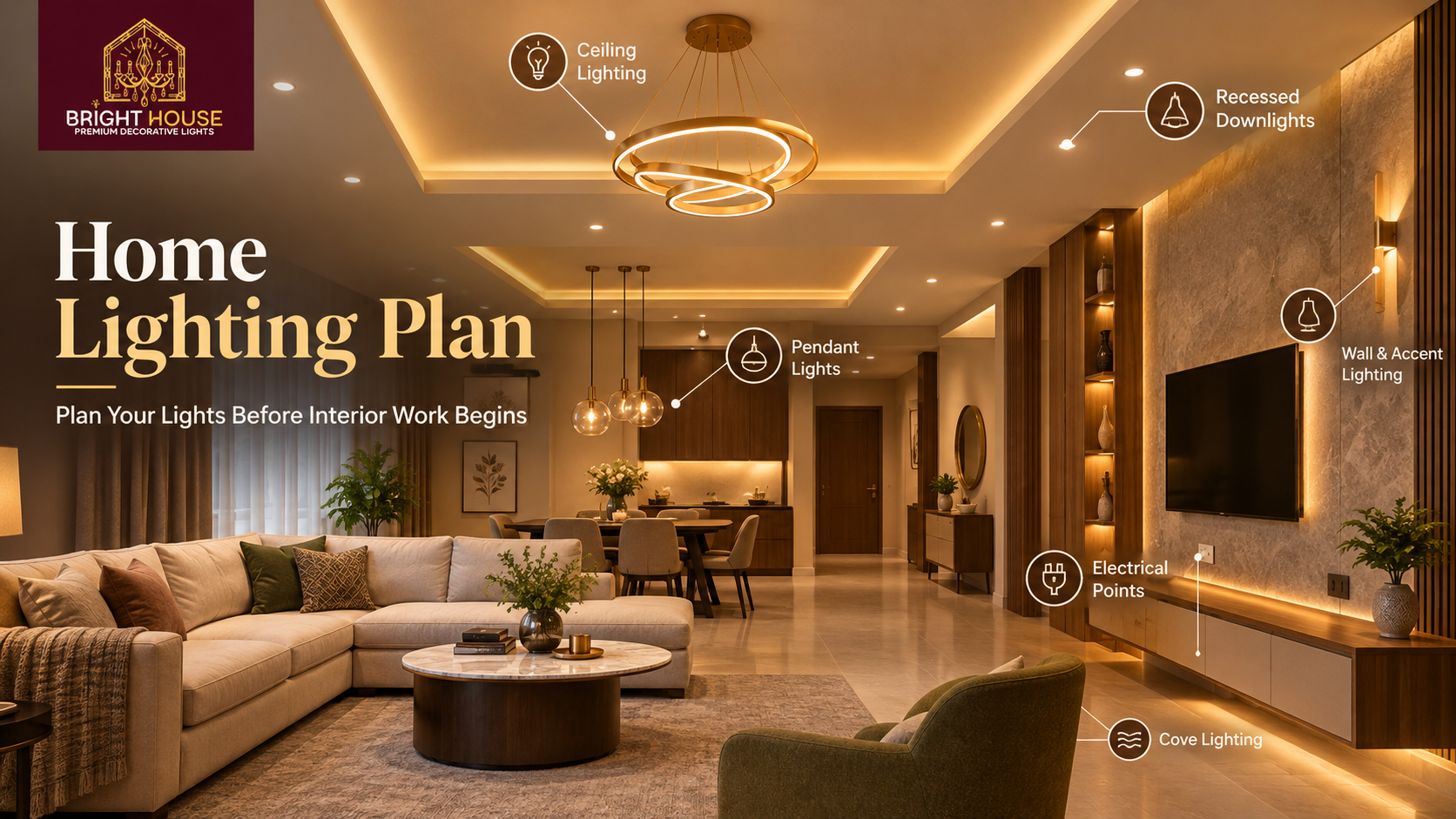
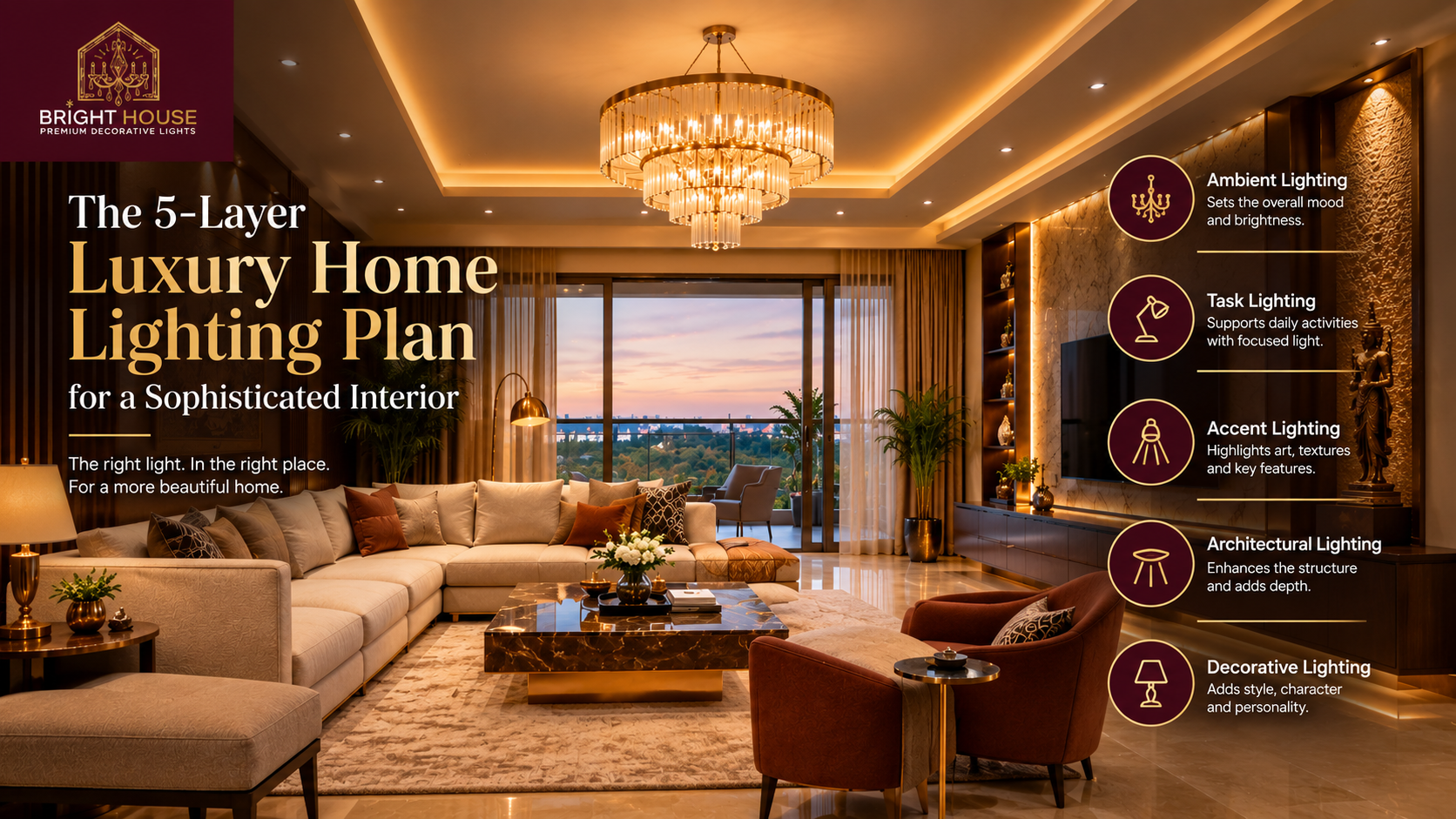
For broader planning, read the Bright House guide on luxury home lighting, which explains how ambient, task, accent, architectural and decorative lighting can work together.
For current design inspiration, see modern lighting trends and explore how warm metals, textured surfaces and contemporary fixture designs are being used in interiors.
Final Thoughts
The right light fixture finish can turn an ordinary lighting installation into an important part of your interior design.
Start with the room rather than the product. Look at your furniture, wall colours, flooring, hardware and existing decorative elements. Then decide whether you want your lighting to blend into the interior or become a statement feature.
Brass and gold can introduce warmth and luxury. Matte black can add contrast and contemporary character. Chrome and other polished metals can create a cleaner, more refined appearance. Mixed finishes can also work beautifully when they are deliberately coordinated.
Most importantly, do not choose a fixture based on finish alone. Consider its size, shape, material, light quality and placement as part of the complete interior.
When all these elements work together, your lighting does more than illuminate the room. It becomes part of the architecture and helps define the atmosphere of your home.
Frequently Asked Questions
1. What is the most popular finish for modern light fixtures?
Brass, gold, matte black and other warm or dark metal finishes are popular choices for modern interiors. The best option depends on the room's existing colours, furniture and hardware.
2. Is brass lighting still suitable for modern interiors?
Yes. Simple brass fixtures can look highly contemporary, particularly when combined with clean geometric shapes, glass and neutral interiors.
3. Are gold light fixtures too traditional?
Not necessarily. Modern gold finishes can look contemporary when paired with minimalist fixture shapes, glass, neutral walls and modern furniture.
4. Can I mix brass and matte black lighting?
Yes. Brass and matte black can create a sophisticated contrast. Use one as the dominant finish and the other as an accent.
5. Should my chandelier and wall lights have the same finish?
They do not have to be identical. Using related or complementary finishes can create a more layered interior while maintaining visual consistency.