A modern home is not defined only by furniture, wall colours, flooring, or architectural details. Lighting plays an equally important role in creating the atmosphere and visual character of a space. The right fixture can make a room feel warmer, more spacious, sophisticated, and inviting, while poorly planned lighting can make even an expensive interior feel flat.
The good news is that creating an elegant lighting scheme does not mean filling every room with oversized fixtures. The secret is choosing the right combination of light sources, proportions, finishes, and placement.
If you are planning a new interior or simply want to refresh your existing space, these luxury lighting ideas can help you create a modern home that feels polished and thoughtfully designed.
What makes luxury lighting different from ordinary lighting?
Luxury lighting combines visual appeal, quality materials, thoughtful proportions, and useful illumination. It is designed to become part of the interior rather than simply provide brightness.
A luxury lighting scheme usually considers:
- The size and layout of the room
- Ceiling height
- Furniture placement
- Wall colours and finishes
- Natural daylight
- Colour temperature
- Fixture materials and finishes
- Ambient, task, and accent lighting
For example, a sculptural chandelier can become the focal point of a living room, while a pair of wall lights can add depth to a feature wall. A table lamp can then provide a softer layer of light for evenings.
The result is not just a brighter room. It is a room with more depth and personality.
1. How can a statement chandelier transform a modern living room?
A statement chandelier can become the visual centre of a living room while providing ambient illumination. Choose a design that complements the scale and style of the room instead of selecting a fixture based only on appearance.
Chandeliers work particularly well in:
- Large living rooms
- Double-height spaces
- Formal sitting areas
- Entrance foyers
- Dining areas
- Open-plan interiors
A modern chandelier does not always have to be traditional crystal. Contemporary designs can feature glass, brass, stone, ceramic, metal, or integrated LED elements.
When selecting one, consider the room dimensions and ceiling height first. An oversized fixture can overwhelm a compact room, while a very small chandelier may disappear in a large space.
For homes with generous ceiling heights, a larger or multi-level chandelier can create a strong architectural focal point.
Tip: Explore Bright House's chandelier collection when comparing styles, materials, and proportions for your space.
2. Why are pendant lights a smart choice for modern interiors?
Pendant lights provide focused illumination while adding decorative character to a room. They are particularly effective when you want to define a specific area without visually filling the entire ceiling.
Pendant lights work well above:
- Dining tables
- Kitchen islands
- Breakfast counters
- Bedside tables
- Reading corners
- Small seating areas
For a modern interior, consider simple geometric pendants, glass designs, minimalist LED fixtures, or natural-material options.
Using two or three matching pendants can also create symmetry above a long dining table or kitchen island. In larger rooms, a cluster of different pendant heights can introduce movement and visual interest.
The key is to make the fixture feel connected to the furniture below it.
For example, a pendant above a dining table should relate to the table's width and shape. A narrow table may suit a linear fixture, while a round table can work well with a circular or central pendant.
Tip: Browse Bright House's pendant light collection for contemporary options that can be incorporated into dining and living spaces.
3. How can wall lights make a modern home look more luxurious?
Wall lights can add depth and softness that a ceiling light alone cannot provide. They are particularly useful for highlighting architectural features, artwork, corridors, bedside areas, and darker corners.
One of the biggest advantages of wall lighting is that it moves illumination to different levels of the room.
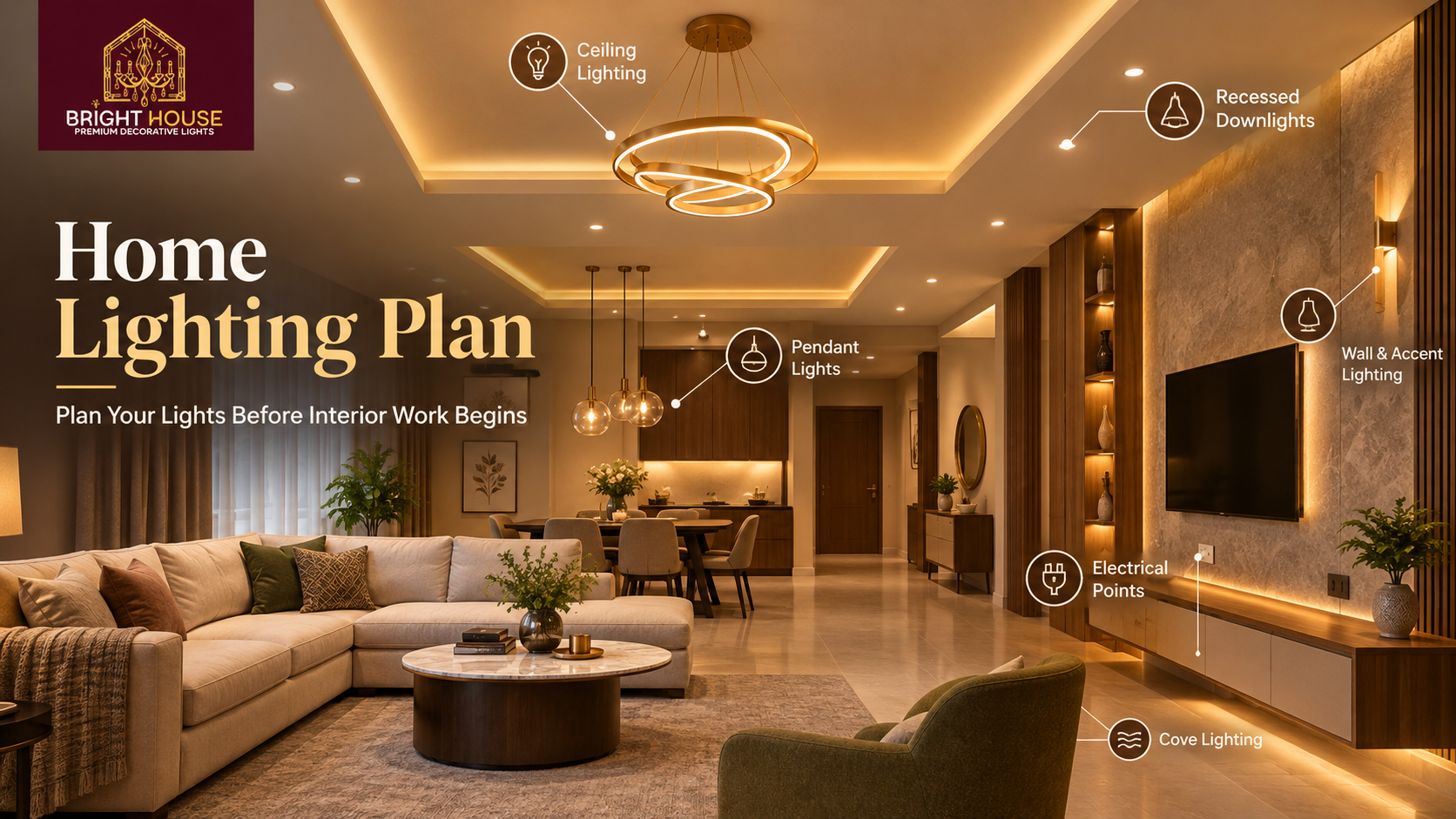
Instead of having all the light come from the ceiling, you can create a layered effect using:
| Lighting layer | Purpose | Suitable fixture |
|---|---|---|
| Ambient | General illumination | Chandelier or ceiling light |
| Task | Focused activities | Table or floor lamp |
| Accent | Decorative emphasis | Wall light or concealed LED |
This combination makes a room feel more balanced.
Wall lights can also be used in pairs. For example, placing matching fixtures on either side of a mirror, artwork, console, or bed can create symmetry.
For a modern luxury look, finishes such as brass, black metal, glass, or stone can complement contemporary interiors.
Tip: Bright House offers indoor wall lighting options suitable for living rooms, bedrooms, corridors, and other areas.
4. Can table lamps add luxury without major renovation?
Yes. Table lamps are one of the easiest ways to introduce a refined lighting layer without changing the electrical layout of a room.
A carefully selected table lamp can work on:
- Bedside tables
- Console tables
- Side tables
- Study desks
- Open shelves
- Entryway furniture
Unlike a ceiling fixture, a table lamp operates at eye and furniture level, creating a softer and more intimate atmosphere.
For a luxury interior, look for combinations of materials such as marble, metal, glass, ceramic, and fabric shades. The lamp does not need to be extremely large or elaborate. Proportion and material quality often have a greater visual impact.
For example, a sculptural lamp on a console can become a decorative feature during the day and a warm accent light at night.
This makes table lamps useful for homes where flexibility is important.
Tip: Bright House's table lamp collection includes options in materials and forms suited to modern interiors.
5. How does layered lighting create a luxury atmosphere?
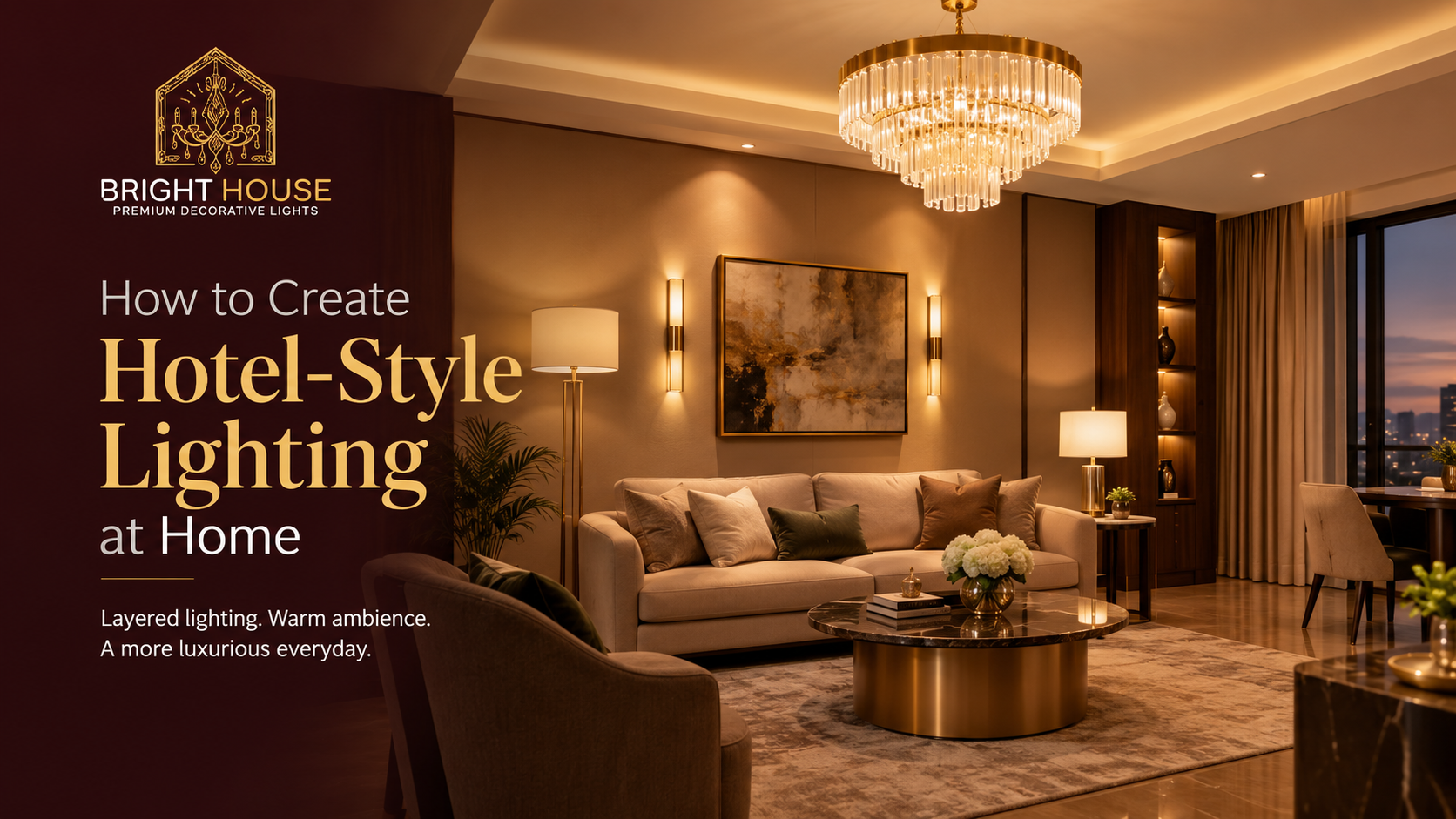
Layered lighting is one of the most effective ways to make a modern interior feel sophisticated because it combines different sources instead of relying on a single bright fixture.
A simple three-layer approach includes:
Ambient lighting
This provides the overall illumination of the room. Chandeliers, ceiling fixtures, and other broad sources can perform this role.
Task lighting
Task lighting provides focused illumination for activities such as reading, working, cooking, or studying. Table lamps, desk lamps, and selected pendant lights can be used here.
Accent lighting
Accent lighting highlights decorative or architectural elements. Wall lights, concealed LEDs, picture lights, and directional fixtures can create this effect.
A layered scheme gives you more control over the mood of a room.
For example, during the day you may need brighter ambient lighting. During dinner, you might reduce the main lighting and rely more heavily on a pendant and accent lights. In the evening, wall lights and table lamps can create a softer atmosphere.
This flexibility is one reason layered lighting works so well in contemporary homes.
6. Which lighting ideas work best for a luxurious bedroom?
Bedroom lighting should feel relaxing rather than overly bright. A combination of soft ambient lighting, bedside lighting, and subtle accent lighting can create a comfortable environment.
Consider these options:
- Pendant lights on either side of the bed
- Decorative wall lights behind or beside the headboard
- Table lamps on bedside tables
- Soft concealed LED lighting
- A compact chandelier for larger bedrooms
- Accent lighting around architectural features
The bedside area deserves particular attention. A light positioned close to the bed can provide useful illumination for reading without forcing the entire room to remain brightly lit.
Warm lighting is generally more suitable for relaxing spaces because it creates a softer visual atmosphere.
If your bedroom has a statement headboard, wall lights can also help highlight its texture and shape.
The goal is to create several gentle lighting points rather than one powerful source.
7. How can you choose luxury lighting that matches your interior style?
The best luxury lighting should complement the existing interior rather than compete with it.
Start by identifying the dominant style of the room.
| Interior style | Lighting direction |
|---|---|
| Modern minimalist | Simple geometric fixtures and clean finishes |
| Contemporary | Sculptural chandeliers and modern pendants |
| Classic | Crystal, brass, and detailed fixtures |
| Modern luxury | Glass, brass, stone, and statement designs |
| Natural | Wood, ceramic, rattan, and organic forms |
| Industrial | Black metal, exposed bulbs, and structured designs |
Material is also important.
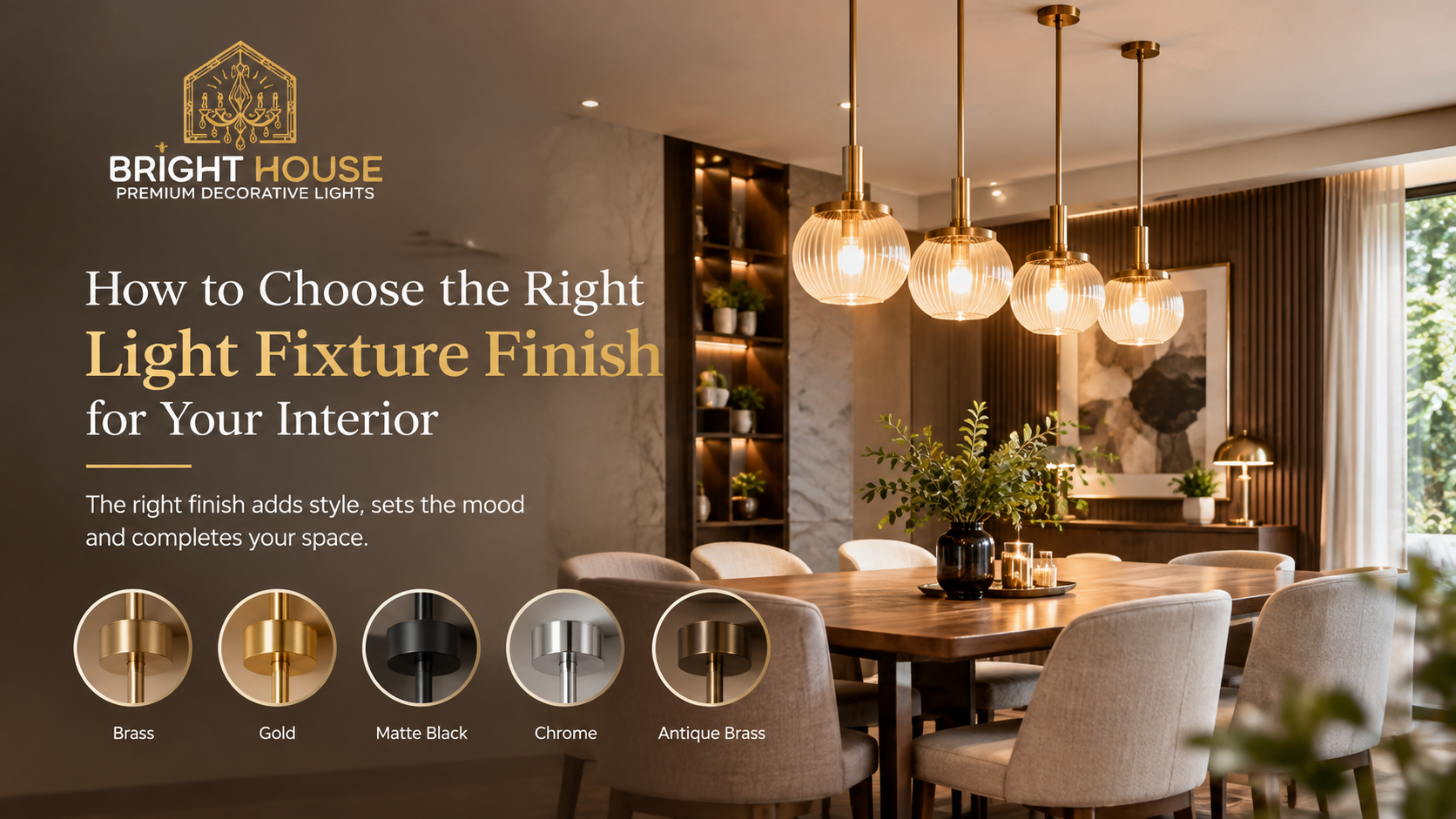
Brass can introduce warmth and elegance. Glass can create a lighter appearance. Stone and marble can add a natural premium feel. Dark metal can create contrast in neutral interiors.
However, matching every fixture in a room exactly is not always necessary. Mixing complementary finishes can make the interior feel more curated.
For example, a brass chandelier can work with black wall lights if both are connected through other elements in the room.
What should you consider before buying luxury lighting?
Before choosing any fixture, check more than its appearance. The following checklist can help:
- Measure the room.
- Check the ceiling height.
- Measure the dining table or furniture beneath the fixture.
- Identify the existing electrical points.
- Consider ceiling fans and other overhead elements.
- Check the fixture dimensions.
- Confirm the light source and colour temperature.
- Check whether the fixture is dimmable.
- Consider how easy it will be to clean.
- Check installation and fixing requirements.
A beautiful fixture that is the wrong size can look out of place. Similarly, an attractive light with poor placement may create glare instead of comfort.
For chandelier installation, the ceiling structure and fixing method should also be considered carefully. The fixture should be securely supported by an appropriate structural fixing rather than relying only on decorative ceiling material.
Which lighting combination works best for different rooms?
Different rooms need different lighting priorities. A practical starting point is:
| Room | Main lighting | Supporting lighting |
|---|---|---|
| Living room | Chandelier or ceiling fixture | Wall lights, table lamps |
| Dining room | Chandelier or pendant | Wall or accent lighting |
| Bedroom | Ceiling fixture or pendant | Bedside lamps, wall lights |
| Entryway | Statement pendant or chandelier | Wall light |
| Study | Ceiling fixture | Task lamp |
| Kitchen | Ceiling lighting | Pendant and task lighting |
This approach allows every room to have its own character while maintaining a consistent lighting language throughout the home.
How can you make luxury lighting feel timeless?
Trends can be useful for inspiration, but timeless lighting starts with good proportions and quality design.
Instead of choosing a fixture simply because it is popular, consider whether it will work with your furniture and interior style for several years.
A timeless lighting scheme usually has:
- Balanced proportions
- Good-quality materials
- Appropriate brightness
- Comfortable colour temperature
- Functional placement
- A combination of lighting layers
- Fixtures that complement the architecture
It is also worth thinking about maintenance. Intricate fixtures may require more cleaning, while simpler designs can be easier to maintain in busy homes.
The best choice is one that looks beautiful when switched off and works effectively when switched on.
What are the most common luxury lighting mistakes?
Even expensive lighting can look ineffective when the planning is poor. Common mistakes include:
- Choosing a fixture that is too small for the room
- Installing only one central light
- Ignoring ceiling height
- Using inconsistent colour temperatures
- Placing bright fixtures directly in the line of sight
- Forgetting about furniture proportions
- Installing decorative lights without considering their actual purpose
- Using too many competing statement fixtures
- Ignoring maintenance and cleaning requirements
Avoiding these mistakes can make a bigger difference than simply buying a more expensive fixture.
Final Thoughts
Luxury lighting is not about filling a home with expensive fixtures. It is about creating a thoughtful relationship between light, furniture, architecture, and everyday activities.
A statement chandelier can establish a focal point. Pendant lights can define dining or kitchen areas. Wall lights can add depth, while table lamps can introduce softer illumination. When these elements are combined thoughtfully, a modern home can feel more comfortable, elegant, and visually complete.
Before making a purchase, measure your space, understand how the room will be used, and consider how different lighting layers can work together.
The right lighting does more than illuminate a room. It helps define how the room feels.
FAQ:
1. What is the best luxury lighting for a modern living room?
A chandelier or sculptural ceiling fixture can provide a strong focal point, while wall lights and table lamps can add softer secondary illumination. A layered approach usually creates more depth than one central fixture.
2. Are chandeliers suitable for modern homes?
Yes. Modern chandeliers are available in many materials, shapes, finishes, and LED configurations. The right choice depends on the room's size, ceiling height, furniture, and interior style.
3. Are pendant lights suitable for small rooms?
Yes. Compact pendant lights can work well in small rooms when their size and hanging height are appropriate. They can also help define a specific area without taking up floor space.
4. How many types of lighting should a modern room have?
A useful starting point is three layers: ambient lighting for general visibility, task lighting for specific activities, and accent lighting for decorative or architectural emphasis.
5. What colour temperature is suitable for a luxury home?
The appropriate colour temperature depends on the room and desired atmosphere. Warmer light is often preferred for relaxing areas such as living rooms and bedrooms, while task-oriented spaces may need a different lighting approach.