Walking into a beautifully designed hotel room often creates an immediate feeling of comfort and luxury. The room may not have dramatically expensive furniture, yet it can still feel polished, warm and inviting.
One of the biggest reasons is lighting.
Hotels rarely depend on a single bright ceiling light. Instead, they combine different sources at different heights to create depth, warmth and flexibility. The same approach can be used in Indian homes, whether you are designing a new apartment, renovating a villa or simply upgrading one room.
The good news is that you do not need to completely redesign your home to achieve the look.
With the right combination of ambient, task, accent and decorative lighting, you can create hotel style lighting at home that feels sophisticated without becoming overly bright or complicated.
What makes hotel-style lighting feel luxurious?
Hotel-style lighting feels luxurious because it is layered, controlled and designed around how people use the space.
Instead of asking one fixture to do everything, each light has a specific purpose.
A typical hotel-inspired lighting scheme may include:
- A central chandelier or pendant for visual impact
- Ambient ceiling lighting for general illumination
- Wall lights for softer vertical lighting
- Table or floor lamps for low-level illumination
- Accent lights for artwork and architectural details
- Concealed LED lighting for a subtle glow
- Dimmers or separate switches for different moods
The result is a room where you can change the atmosphere depending on the time of day.
Bright House's lighting guidance similarly recommends combining ambient, task and accent sources rather than depending on one ceiling fixture.
How does layered lighting create a hotel-style atmosphere?
Layered lighting creates a hotel-style atmosphere by distributing light across different levels instead of concentrating everything on the ceiling.
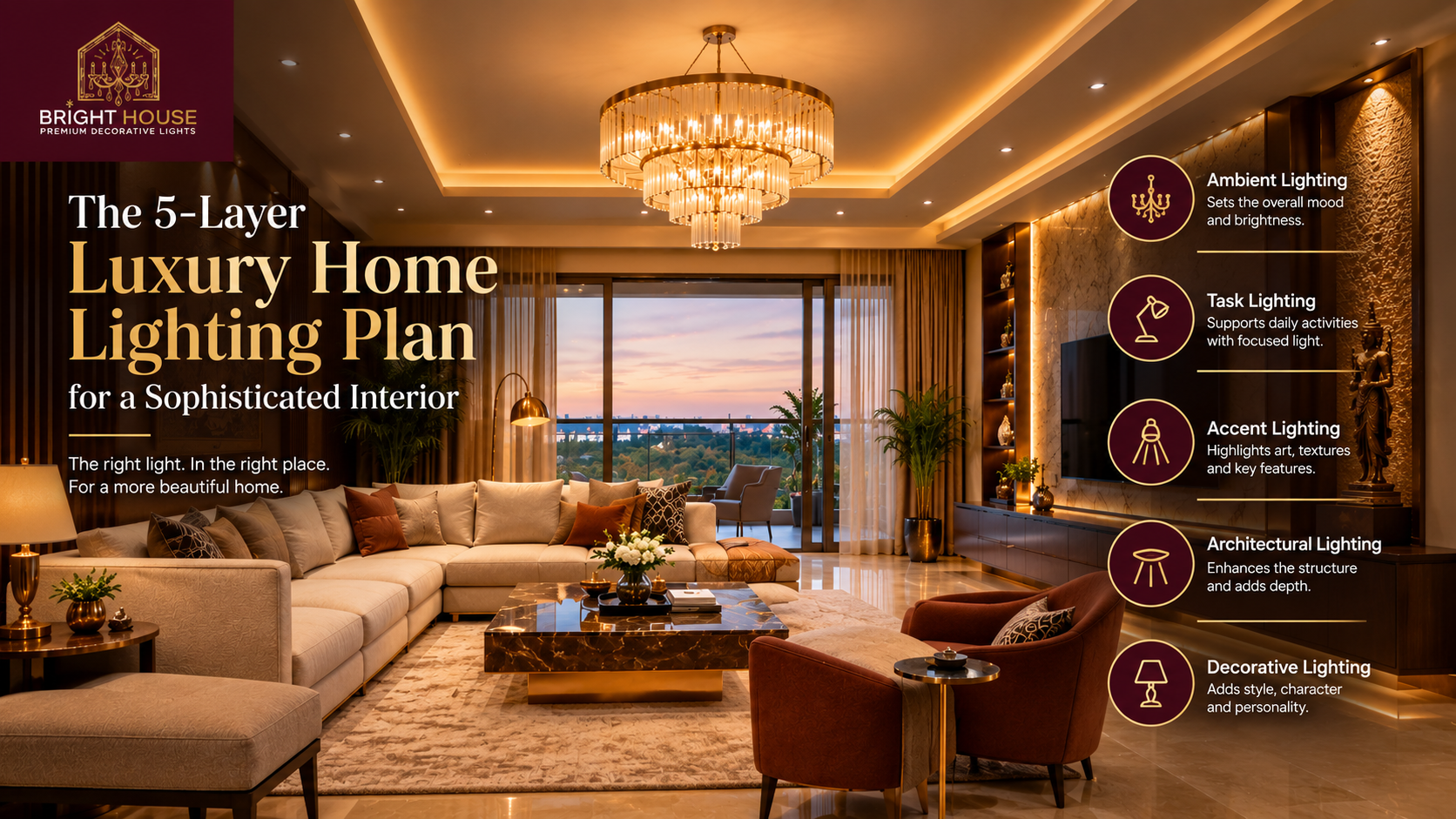
The three basic layers are:
| Lighting Layer | Purpose | Suitable Fixtures |
|---|---|---|
| Ambient | General illumination | Chandeliers, pendants, ceiling lights |
| Task | Light for specific activities | Table lamps, floor lamps, reading lights |
| Accent | Highlighting features | Wall lights, spotlights, concealed LEDs |
A fourth layer, decorative lighting, can then be added to give the room personality.
This is important because a room with only overhead lighting can look flat. When light reaches walls, furniture, artwork and lower surfaces, the room develops more depth.
For example, imagine a living room in the evening. Instead of switching on one powerful ceiling light, you could use a chandelier at a lower brightness, a wall light near artwork and a floor lamp beside the sofa.
The room immediately feels more relaxed.
What colour temperature should you use for hotel-style lighting?
Warm white lighting between 2700K and 3000K is a strong starting point for creating a comfortable hotel-inspired atmosphere at home.
Warmer light works particularly well with:
- Wooden furniture
- Brass finishes
- Beige interiors
- Cream walls
- Natural stone
- Neutral fabrics
- Luxury hotel-inspired interiors
A simple guide is:
| Colour Temperature | Appearance | Best Use |
|---|---|---|
| 2700K | Warm and relaxing | Bedrooms and evening ambience |
| 3000K | Warm but clearer | Living rooms and dining areas |
| 3500K | Neutral | Functional areas |
| 4000K+ | Cool and crisp | Task-oriented areas |
The important point is consistency.
If your chandelier produces warm light but your wall lights produce very cool white light, the room may look visually disconnected.
For a hotel-style appearance, choose a coherent colour temperature across the main lighting layers.
How can you create hotel-style lighting in the living room?
The living room is one of the best places to introduce hotel-inspired lighting because it usually has several functional zones.
Start with one main decorative fixture, such as a chandelier or pendant.
Then introduce lower-level lighting.
A practical arrangement could include:
- Main light: Chandelier or pendant
- Wall lighting: Wall lights near artwork or feature walls
- Seating light: Floor or table lamp beside a sofa
- Accent lighting: Directional light for artwork or décor
- Architectural lighting: Concealed LED lighting where appropriate
The key is not to make every light equally bright.
During the day, you may need stronger ambient lighting. In the evening, you can reduce the main light and rely more heavily on wall lights and lamps.
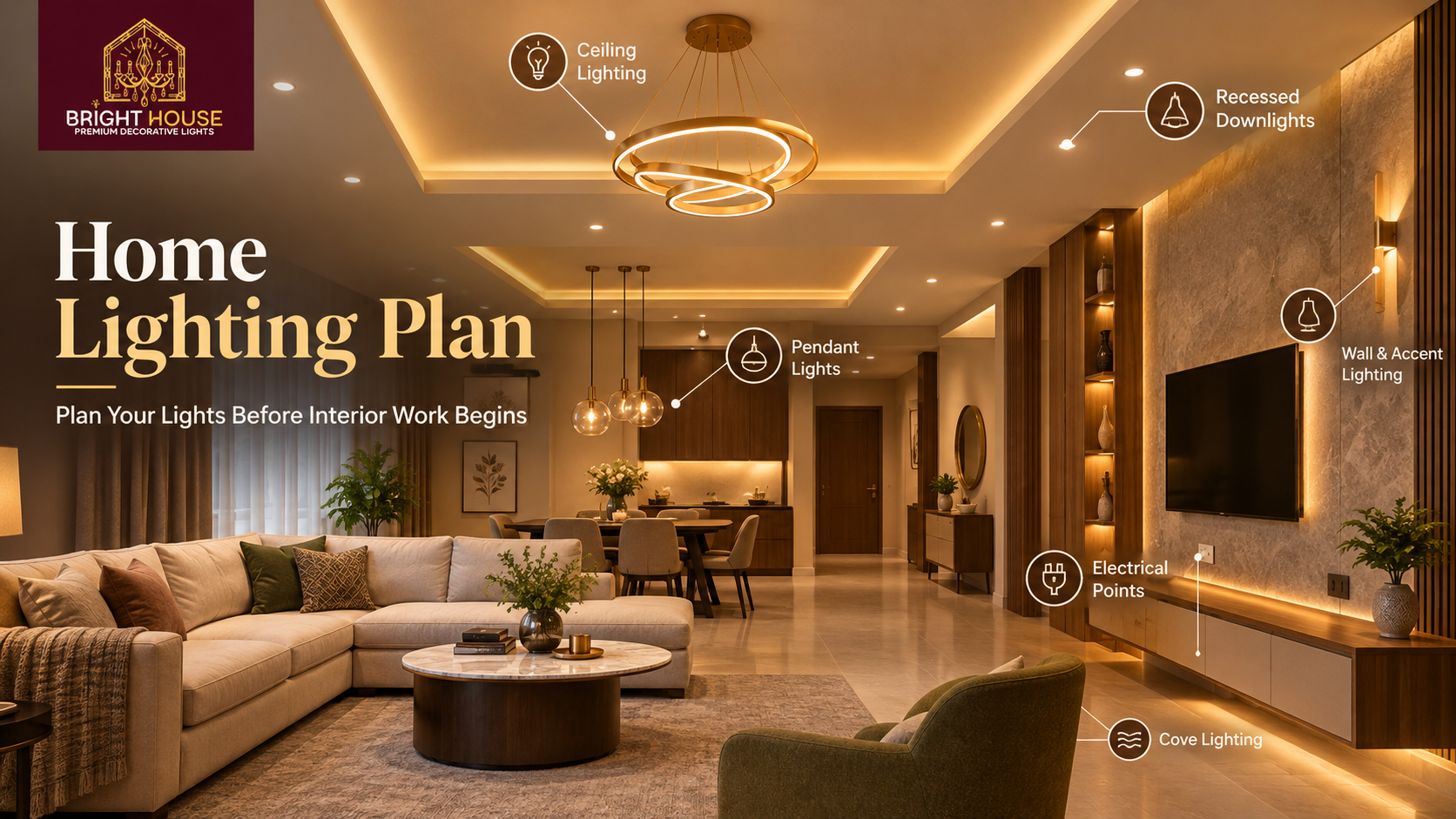
Bright House's living-room guide recommends this type of layered approach and notes that fixture selection should consider room size, ceiling height, furniture arrangement and electrical points.
Which fixtures work best in a hotel-style living room?
| Fixture | Hotel-Inspired Effect |
|---|---|
| Chandelier | Creates a strong focal point |
| Pendant | Adds style over a defined zone |
| Wall light | Creates warmth and depth |
| Floor lamp | Adds low-level evening light |
| Table lamp | Creates intimate illumination |
| Concealed LED | Adds subtle architectural glow |
For a premium look, avoid filling the ceiling with too many small downlights. A smaller number of carefully positioned sources can create a more sophisticated result.
LED lighting can help create an elegant atmosphere while offering efficient and flexible lighting options.
How can you create hotel-style bedroom lighting?
Bedrooms are where hotel-style lighting can make the biggest difference.
Think about the last luxury hotel room you visited. The lighting was probably not extremely bright. Instead, different lights allowed you to create different moods.
You can recreate that approach at home.
Start with a soft central fixture or decorative pendant. Add bedside lights on both sides of the bed. If your bedroom has a feature wall, consider adding subtle wall lighting or concealed lighting.
A practical bedroom setup includes:
- Central decorative light
- Bedside table lamps
- Wall lights or sconces
- Concealed headboard lighting
- Wardrobe or cabinet lighting
- Separate switching for different zones
Bedside lighting is particularly important. Instead of using a single bright ceiling light whenever you want to read, a dedicated bedside lamp provides focused illumination without lighting the entire bedroom.
For an especially polished appearance, use matching bedside fixtures or a visually balanced pair.
Should you use chandeliers for hotel-style home lighting?
Yes, a chandelier can be an excellent focal point for hotel-style home lighting, provided it is correctly sized for the room.
The mistake is choosing a chandelier based only on how attractive it looks in a showroom.
Its size should relate to the room, ceiling height and furniture.
A useful starting formula is to add the room's length and width in feet and treat the result as an approximate chandelier diameter in inches.
For example:
12 ft + 14 ft = approximately 26 inches
This is only a starting point. Furniture, ceiling height and the visual weight of the fixture should also be considered.
Bright House's chandelier sizing guide provides room-by-room guidance on fixture diameter, hanging height and floor clearance.
For a double-height space, a larger statement chandelier can create the dramatic vertical effect commonly seen in luxury hotels.
For a standard-height apartment, a compact chandelier or pendant may create a better proportion.
Where should wall lights be used to create a luxury look?
Wall lights are useful because they bring illumination down from the ceiling and onto vertical surfaces.
They can be used:
- Beside artwork
- Around a feature wall
- On either side of a mirror
- Beside a bed
- Along a corridor
- Beside a console
- In darker corners
- Near architectural features
Wall lights are particularly useful when you want a softer evening atmosphere.
Instead of illuminating the entire room from above, they create pools of light at eye level.
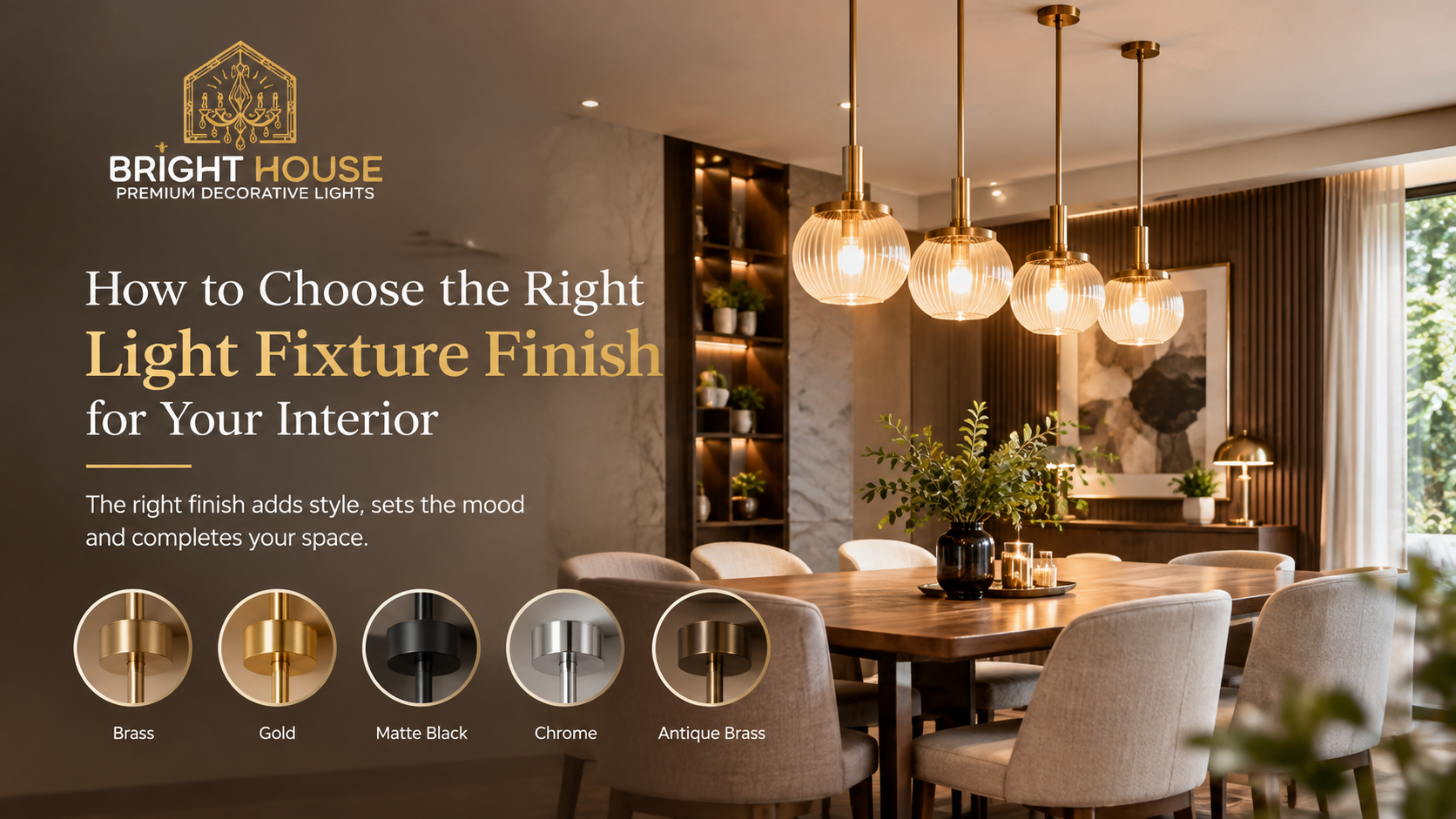
Bright House's indoor wall-light collection includes designs suitable for living rooms, bedrooms and corridors, including brass, glass and contemporary finishes.
How can pendant lights make a home look like a boutique hotel?
Pendant lights work particularly well when you want to create a defined zone.
Use them above:
- Dining tables
- Kitchen islands
- Bedside areas
- Console tables
- Reading corners
- Small seating areas
Instead of installing a large ceiling fixture in every area, pendant lights can visually define different zones.
For a dining room, a statement pendant or chandelier above the table can become the main visual feature.
For a bedroom, smaller pendants on either side of the bed can replace conventional bedside lamps and create a more contemporary hotel-inspired appearance.
The important consideration is scale. A pendant that is too small can disappear into the room, while an oversized fixture can dominate the space.
How important is dimming for hotel-style lighting?
Dimming is one of the most effective ways to recreate the flexibility of hotel lighting.
A room does not need the same brightness at 9 AM, 6 PM and 11 PM.
For example:
| Time | Suggested Lighting |
|---|---|
| Morning | Natural daylight + ambient lighting |
| Afternoon | Ambient lighting as required |
| Evening | Warm ambient + accent lighting |
| Dinner | Pendant/chandelier + wall lighting |
| Late night | Lamps + low-level lighting |
Where compatible fixtures and electrical controls are available, separate switches and dimmers allow you to create different scenes.
A living room can therefore change from a bright family space to a relaxed evening environment without changing any furniture.
What lighting mistakes should you avoid?
Creating a hotel-style interior is not about buying the most expensive fixtures.
Poor planning can make premium lighting look ordinary.
Avoid these common mistakes:
- Using one extremely bright ceiling light
- Installing too many downlights
- Choosing fixtures before measuring the room
- Mixing warm and cool colour temperatures randomly
- Using oversized chandeliers
- Installing decorative lights without considering furniture
- Ignoring glare
- Placing bright bulbs directly in the line of sight
- Forgetting dimming or separate switching
- Using exposed LED strips where the light source itself becomes distracting
The objective is to notice the atmosphere, not the technology creating it.
How should you plan hotel-style lighting before buying fixtures?
The best approach is to plan the room first and choose products second.
Follow this simple process:
1. Measure the room
Record:
- Length
- Width
- Ceiling height
- Furniture dimensions
2. Identify activity zones
Mark where people will:
- Sit
- Read
- Eat
- Work
- Sleep
- Walk
- Display artwork
3. Decide your lighting layers
Determine where ambient, task, accent and decorative lighting will come from.
4. Check electrical points
Identify existing ceiling and wall points before finalising fixture positions.
5. Select fixture sizes
Compare the fixture against the room and furniture instead of choosing based only on appearance.
6. Plan switching
Decide which lights should operate together and which should have separate controls.
7. Check colour temperature
Keep the main lighting scheme visually consistent.
This approach can save you from buying beautiful fixtures that do not work together.
Can you create hotel-style lighting without a false ceiling?
Yes. A false ceiling is not essential for creating a sophisticated lighting scheme.
You can combine:
- Wall lights
- Floor lamps
- Table lamps
- Pendant lights
- Surface-mounted fixtures
- Compact ceiling lights
- Concealed lighting where suitable
This is particularly useful in apartments where ceiling height is limited.
In many cases, adding lighting at different heights can create more visual interest than adding more ceiling fixtures.
What is a simple hotel-style lighting plan for each room?
| Room | Main Light | Supporting Light | Mood Light |
|---|---|---|---|
| Living Room | Chandelier/Pendant | Wall light + floor lamp | Accent lighting |
| Bedroom | Ceiling fixture/Pendant | Bedside lamps | Headboard lighting |
| Dining Room | Chandelier/Pendant | Wall light | Decorative accent |
| Entryway | Pendant/Chandelier | Wall light | Artwork lighting |
| Kitchen | Ceiling lighting | Pendant + task light | Cabinet lighting |
| Home Office | Ceiling light | Desk lamp | Shelf lighting |
The exact fixture combination should depend on room dimensions, furniture, ceiling height and how the space is used.
Why does hotel-style lighting make a home feel more expensive?
Lighting changes how materials, colours and architectural details are perceived.
A textured wall can become more prominent when softly illuminated. Brass can appear richer under warm light. Artwork can become a focal point when properly accented. A chandelier can create a sense of scale in a large room.
This is why luxury lighting should be considered part of interior design rather than simply an electrical requirement.
The fixture itself matters, but the way it works with the rest of the room matters even more.
What is the easiest way to start creating hotel-style lighting at home?
Start with one room rather than changing the entire house at once.
The living room or bedroom is usually a good starting point.
Begin with these five steps:
- Replace harsh lighting with a warmer colour temperature.
- Add one decorative focal fixture.
- Introduce a wall, table or floor light.
- Put different lighting layers on separate controls where practical.
- Use accent lighting to highlight one or two important features.
Once you understand how the layers work, you can apply the same principle throughout your home.
Final thoughts: How do you create hotel style lighting at home?
Creating hotel style lighting at home is less about filling your ceiling with fixtures and more about creating the right atmosphere.
Use a combination of ambient, task, accent and decorative lighting. Choose warm and consistent colour temperatures. Select chandeliers and pendant lights according to room proportions. Use wall lights and lamps to bring illumination down to different levels.
Most importantly, plan the lighting around how you actually use each room.
A beautifully designed lighting scheme should allow your home to feel bright when you need it, warm when you want to relax and dramatic when you want to entertain.
With thoughtful planning and the right fixtures, you can bring the refined atmosphere of a luxury hotel into your own home.
Explore Bright House's lighting collections and speak with a lighting expert to plan the right solution for your space.
Frequently Asked Questions
1. What is hotel style lighting at home?
Hotel style lighting at home is a layered lighting approach that combines ambient, task, accent and decorative lighting to create a warm, comfortable and sophisticated atmosphere.
2. What colour light is best for a hotel-style home?
Warm white lighting around 2700K to 3000K is generally a strong choice for bedrooms, living rooms and other relaxing spaces.
3. Do I need a chandelier to create hotel-style lighting?
No. A chandelier can create a strong focal point, but pendant lights, wall lights, table lamps and floor lamps can also create a hotel-inspired atmosphere.
4. How many lights should a living room have?
There is no fixed number. The better approach is to combine several lighting layers so that the room has general illumination, focused light and accent lighting.
5. Can I create hotel-style lighting without a false ceiling?
Yes. Wall lights, floor lamps, table lamps, pendants and suitable surface-mounted fixtures can create layered lighting without requiring a false ceiling.