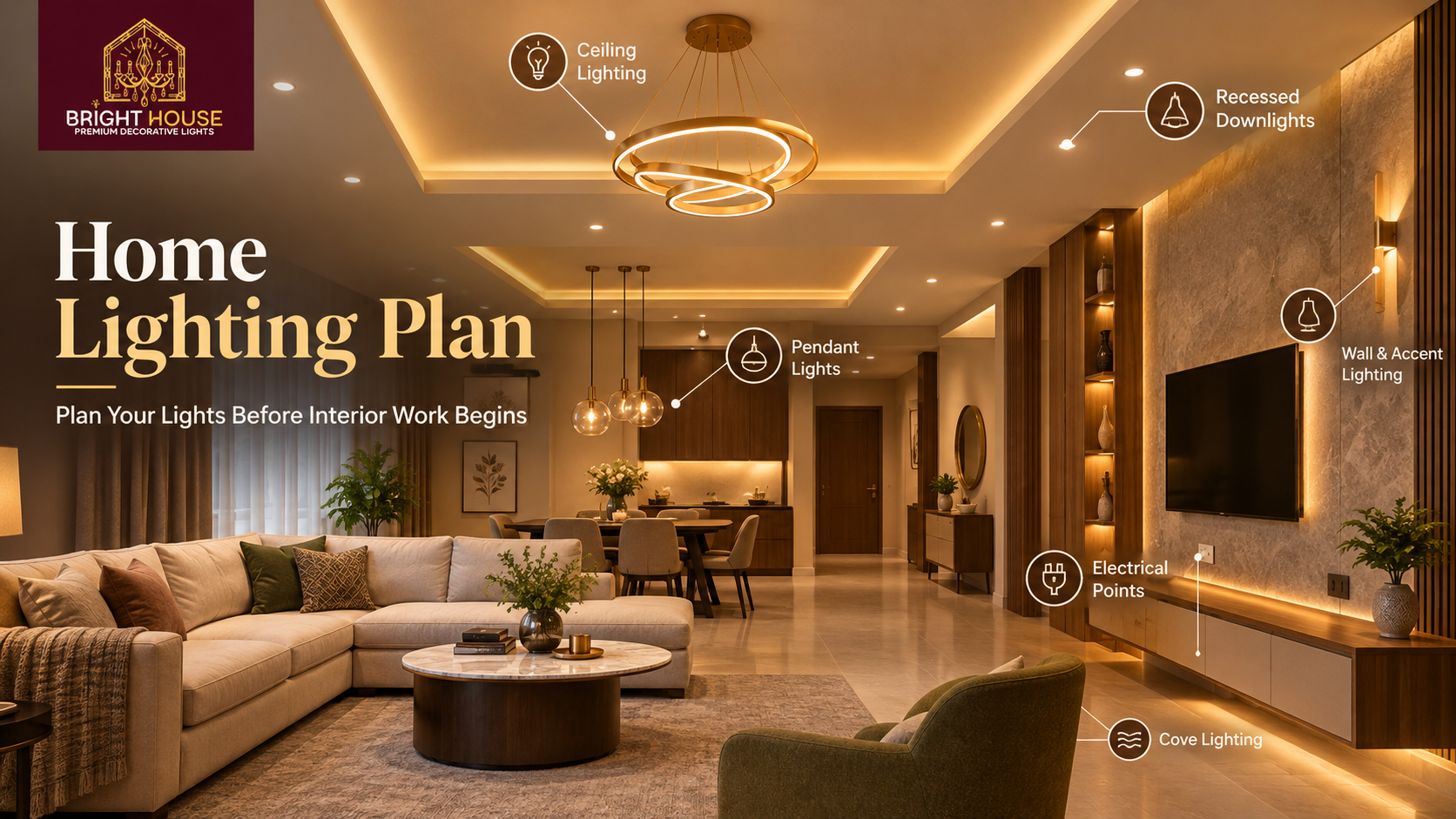
Choosing the right chandelier size can completely change how a room looks and feels. A chandelier that is too small can disappear into a large room, while one that is too large can make the space feel crowded. The right size creates balance between the ceiling, furniture, room dimensions and overall interior design.
The good news is that choosing the right chandelier size does not have to be complicated. With a few simple measurements, you can find a fixture that feels proportional and works comfortably in your space.
This chandelier size guide explains how to measure your room, calculate the ideal chandelier diameter, choose the right height for different ceilings, and select the appropriate size for living rooms, dining rooms, bedrooms, foyers and double-height spaces.
What Is the Basic Rule for Choosing a Chandelier Size?
A simple starting point is to add the length and width of the room in feet and use the resulting number as the approximate chandelier diameter in inches.
For example, if your room is 12 feet long and 14 feet wide:
12 + 14 = 26
A chandelier approximately 26 inches in diameter is a useful starting point.
This is a sizing guideline, not an absolute rule. Furniture placement, ceiling height, fixture design and the visual weight of the chandelier should also be considered before making the final choice.
Chandelier Size Calculator
| Room Size | Length + Width | Starting Chandelier Diameter |
|---|---|---|
| 10 × 12 ft | 22 | 22 inches |
| 12 × 14 ft | 26 | 26 inches |
| 12 × 16 ft | 28 | 28 inches |
| 14 × 16 ft | 30 | 30 inches |
| 16 × 20 ft | 36 | 36 inches |
| 20 × 24 ft | 44 | 44 inches |
For open-plan homes, measure the specific zone where the chandelier will hang rather than adding the dimensions of the entire open space.
How Do You Measure a Room for a Chandelier?
Start by measuring three things: the room length, room width and finished ceiling height.
Measure the finished ceiling rather than the structural slab. If your home has a false ceiling, the visible finished ceiling is the measurement that matters when deciding how much space is available for the fixture.
Before purchasing, check:
- Room length
- Room width
- Finished ceiling height
- Table or furniture dimensions
- Electrical point location
- Distance from the fixture to walking areas
- Chandelier diameter
- Chandelier height
- Fixture weight
- Whether the chandelier is dimmable
These measurements help prevent one of the most common lighting mistakes: choosing a beautiful chandelier that is the wrong scale for the room.
What Size Chandelier Is Best for a Living Room?
For a living room, the chandelier should complement the seating area without competing with sofas, tables or other architectural features.
A 12 × 14 foot living room, for example, can start with a chandelier around 26 inches in diameter. A larger 14 × 16 foot room can work with a fixture around 30 inches.
For larger living rooms, especially rooms with high ceilings, you can consider a wider or more vertically substantial chandelier.
Living Room Chandelier Size Guide
| Living Room Size | Suggested Starting Diameter |
|---|---|
| 10 × 12 ft | 22 inches |
| 12 × 14 ft | 26 inches |
| 12 × 16 ft | 28 inches |
| 14 × 16 ft | 30 inches |
| 16 × 20 ft | 36 inches |
The size should also relate to your furniture. A large sectional sofa and generous seating arrangement can support a more substantial chandelier than a compact seating arrangement in the same-sized room.
For more living room-specific guidance, see the Bright House guide on choosing a living room chandelier.
How High Should a Chandelier Hang in a Living Room?
In areas where people walk underneath the chandelier, keep approximately 7 feet of clearance from the floor to the lowest point of the fixture.
This gives people enough headroom while allowing the chandelier to remain visually connected to the room.
For a standard 9 or 10 foot ceiling, a compact or semi-flush chandelier may be more practical. Taller ceilings provide more room for a larger fixture with a longer drop.
If your living room has a low ceiling, choosing a wider and shallower design can create visual impact without sacrificing headroom.
What Size Chandelier Should You Choose for a Dining Room?
For a dining room, the chandelier should be sized according to the dining table, rather than the room alone.
A useful starting point is to choose a chandelier with a diameter of approximately half to two-thirds of the table's width.
For example, a dining table that is 48 inches wide could work with a chandelier approximately 24 to 32 inches wide, depending on the design and visual weight of the fixture.
Dining Table and Chandelier Size
| Table Width | Approximate Chandelier Diameter |
|---|---|
| 36 inches | 18 to 24 inches |
| 42 inches | 21 to 28 inches |
| 48 inches | 24 to 32 inches |
| 60 inches | 30 to 40 inches |
| 72 inches | 36 to 48 inches |
The chandelier should also be centred over the table rather than simply centred in the room.
How High Should a Chandelier Hang Above a Dining Table?
A dining chandelier is normally positioned lower than a living room chandelier because it does not sit above a walking path.
A practical starting point is 30 to 36 inches between the tabletop and the lowest point of the chandelier.
This height keeps the fixture visually connected to the dining table while maintaining a comfortable line of sight across the table.
For higher ceilings, the chandelier may need a longer drop while maintaining a suitable distance above the tabletop.
The exact height can vary according to the fixture's shape, brightness and the sightlines of the people using the room.
What Chandelier Size Works Best for a 9-Foot Ceiling?
A 9-foot ceiling requires more attention to fixture height than a high-ceiling room.
A chandelier with a shorter body or semi-flush design is often more practical because it preserves headroom. A wider, shallow fixture can still make a strong visual statement without extending too far downward.
For a 9-foot ceiling:
- Consider semi-flush chandeliers.
- Look for compact or low-profile designs.
- Avoid unnecessarily long drops in walking areas.
- Consider wider fixtures when the room needs more visual presence.
- Check the finished ceiling height after false-ceiling installation.
- Keep sufficient clearance below the fixture.
For more detailed guidance, see the Bright House article about choosing a chandelier for low-ceiling rooms.
What Chandelier Size Works Best for a 10-Foot Ceiling?
A 10-foot ceiling gives you more flexibility than a 9-foot ceiling.
You can consider a short-rod chandelier, compact statement chandelier or a larger decorative fixture, depending on the room.
The fixture should still be proportional to the room. A 10-foot ceiling does not automatically mean you need an oversized chandelier.
The right combination is:
Room size + ceiling height + furniture scale + chandelier proportions
A large room with a 10-foot ceiling may need a wider chandelier, while a smaller room with the same ceiling height may look better with a more compact fixture.
How Do You Choose a Chandelier for a Double-Height Room?
Double-height spaces require a different approach because vertical scale becomes more important.
A standard low-profile chandelier can look too small when placed in a tall foyer, staircase or living room. In these spaces, consider chandeliers with greater vertical presence, including cascading, tiered or multi-level designs.
For a double-height room, consider:
- The total ceiling height
- The vertical height of the chandelier
- The viewing angle from upper floors
- Staircase and balcony clearances
- The position of windows
- Maintenance and cleaning access
- Fixture weight and fixing requirements
A double-height foyer can benefit from a chandelier that fills the vertical space rather than simply increasing the diameter of a standard fixture.
Can You Use a Large Chandelier in a Small Room?
Yes, but the fixture needs to have the right visual weight.
An open-frame chandelier can sometimes look lighter than a dense crystal design of the same diameter. Similarly, a slim LED chandelier may appear less visually heavy than a traditional multi-tier fixture.
If the room is compact:
- Choose a fixture with an appropriate diameter.
- Consider open or lightweight visual designs.
- Avoid excessive vertical drop.
- Keep furniture proportions in mind.
- Make sure the chandelier does not interfere with doors, windows or circulation.
- Use dimming when you need flexibility in brightness.
The goal is not simply to make the chandelier smaller. The goal is to make the entire composition feel balanced.
Does Ceiling Height Affect Chandelier Size?
Yes. Ceiling height affects the vertical dimensions and hanging position of the chandelier, while room dimensions generally influence the diameter.
As a general starting point, a chandelier body can have approximately 2.5 to 3 inches of fixture height for every foot of ceiling height. This should be adjusted according to the room, furniture and fixture design.
For example, a 10-foot ceiling can accommodate more vertical fixture height than an 8-foot ceiling.
However, over a dining table, the chandelier is governed primarily by the table and the desired clearance above it.
How Do You Choose the Right Chandelier Size for a Bedroom?
Bedrooms generally benefit from smaller, visually lighter chandeliers than living rooms.
The chandelier should complement the bed and other furniture without overwhelming the room.
For a bedroom:
- Measure the room before selecting the fixture.
- Consider the bed width and position.
- Choose a compact design for lower ceilings.
- Use warm, comfortable lighting.
- Select a dimmable fixture when possible.
- Make sure the fixture does not obstruct wardrobe doors or walking paths.
A decorative chandelier can work particularly well in bedrooms with higher ceilings or a large central ceiling area.
What Size Chandelier Is Best for a Foyer?
The foyer is often the first area guests see, so the chandelier can act as a visual focal point.
For a standard-height foyer, use the room-size calculation as your starting point. For a double-height entrance, prioritize vertical scale and visibility.
A foyer chandelier should also be positioned so that it does not interfere with doors, staircases or upper-level railings.
If the entrance has a staircase or tall void, cascading and tiered chandeliers can help fill the vertical space.
What Other Factors Should You Check Before Buying a Chandelier?
Size is important, but it is not the only consideration.
1. Fixture weight
Check the chandelier's total weight before installation. The mounting system should be suitable for the actual ceiling structure.
2. Ceiling type
A false ceiling should not automatically be treated as the structural support for a heavy chandelier. The fixing should be properly anchored to the structural ceiling where required.
3. Electrical point
Check whether the existing electrical point is correctly positioned. This is especially important when replacing an existing light.
4. Light output
A chandelier can provide decorative and ambient illumination, but it does not always need to provide all the light for a room. Layering it with wall lights, floor lamps, table lamps or other sources can create a more flexible lighting scheme.
5. Colour temperature
For living rooms, bedrooms and dining areas, warm white lighting can create a comfortable atmosphere. The exact colour temperature should match the interior design and other light sources in the room.
6. Maintenance
Large chandeliers can be difficult to clean, particularly in double-height spaces. Consider how bulbs, LED modules, crystals and other components will be maintained before installation.
What Are the Most Common Chandelier Sizing Mistakes?
Avoid these common mistakes when choosing a chandelier:
- Buying a fixture based only on appearance.
- Choosing a chandelier that is too small for the room.
- Ignoring ceiling height.
- Measuring the entire open-plan space instead of the specific zone.
- Using room dimensions instead of table dimensions for a dining chandelier.
- Forgetting furniture proportions.
- Ignoring fixture weight.
- Installing into a decorative false ceiling without suitable structural fixing.
- Choosing a long chandelier for a low ceiling.
- Forgetting cleaning and maintenance access.
A few minutes of measuring before purchasing can prevent expensive installation changes later.
What Is the Quickest Way to Calculate Chandelier Size?
Use this simple three-step method:
Step 1: Measure the room length and width in feet.
Step 2: Add the two numbers.
Step 3: Use the result as the approximate chandelier diameter in inches.
For example:
14 ft + 16 ft = 30 inches
So, a chandelier around 30 inches in diameter is a sensible starting point for a 14 × 16 foot room.
For dining rooms, use the table width instead:
Table width × 0.5 to 0.67 = approximate chandelier diameter
Then check the ceiling height, furniture layout, fixture height and visual weight before making the final decision.
Chandelier Size Guide: Quick Reference Table
| Space | Main Sizing Rule | Typical Consideration |
|---|---|---|
| Living room | Room length + width | Scale to seating zone |
| Dining room | Half to two-thirds of table width | Hang 30 to 36 inches above table |
| Bedroom | Room dimensions and bed scale | Choose a lighter, compact design |
| Foyer | Room dimensions | Consider vertical scale |
| Double-height foyer | Vertical space | Cascading or tiered designs |
| Low ceiling | Prioritize fixture height | Wider, shallower designs |
| Open-plan room | Size the individual zone | Avoid sizing to the entire floor |
Final Thoughts
Choosing the right chandelier size is primarily about proportion. Start with the dimensions of the room or dining table, then consider ceiling height, furniture, clearance, fixture weight and visual design.
For living rooms, use room dimensions as your starting point. For dining rooms, size the chandelier according to the table. For low ceilings, prioritize a shorter body. For double-height spaces, think vertically and consider cascading or tiered designs.
Most importantly, treat sizing formulas as starting points rather than strict rules. The best chandelier is one that feels naturally balanced with the architecture and furniture around it.
With the right measurements and a little planning, you can choose a chandelier that becomes a beautiful focal point without overpowering the room.
Frequently Asked Questions
1. What is the ideal chandelier size for a living room?
A useful starting point is to add the living room's length and width in feet and use that number as the approximate chandelier diameter in inches. Furniture arrangement and ceiling height should then be considered.
2. How big should a chandelier be over a dining table?
A dining chandelier can be approximately half to two-thirds the width of the dining table. The final size should also consider the fixture's visual weight and design.
3. How far should a chandelier hang above a dining table?
A practical starting range is 30 to 36 inches from the tabletop to the lowest point of the chandelier.
4. Can I install a chandelier in a low-ceiling room?
Yes. Choose a compact, semi-flush or low-profile chandelier and prioritize headroom. A wider, shallower fixture can provide visual impact without using excessive vertical space.
5. What size chandelier is suitable for a double-height ceiling?
Double-height rooms generally need a chandelier with greater vertical presence. Cascading, tiered and multi-level designs can help fill the vertical space, but the final dimensions should be based on the height and layout of the room.