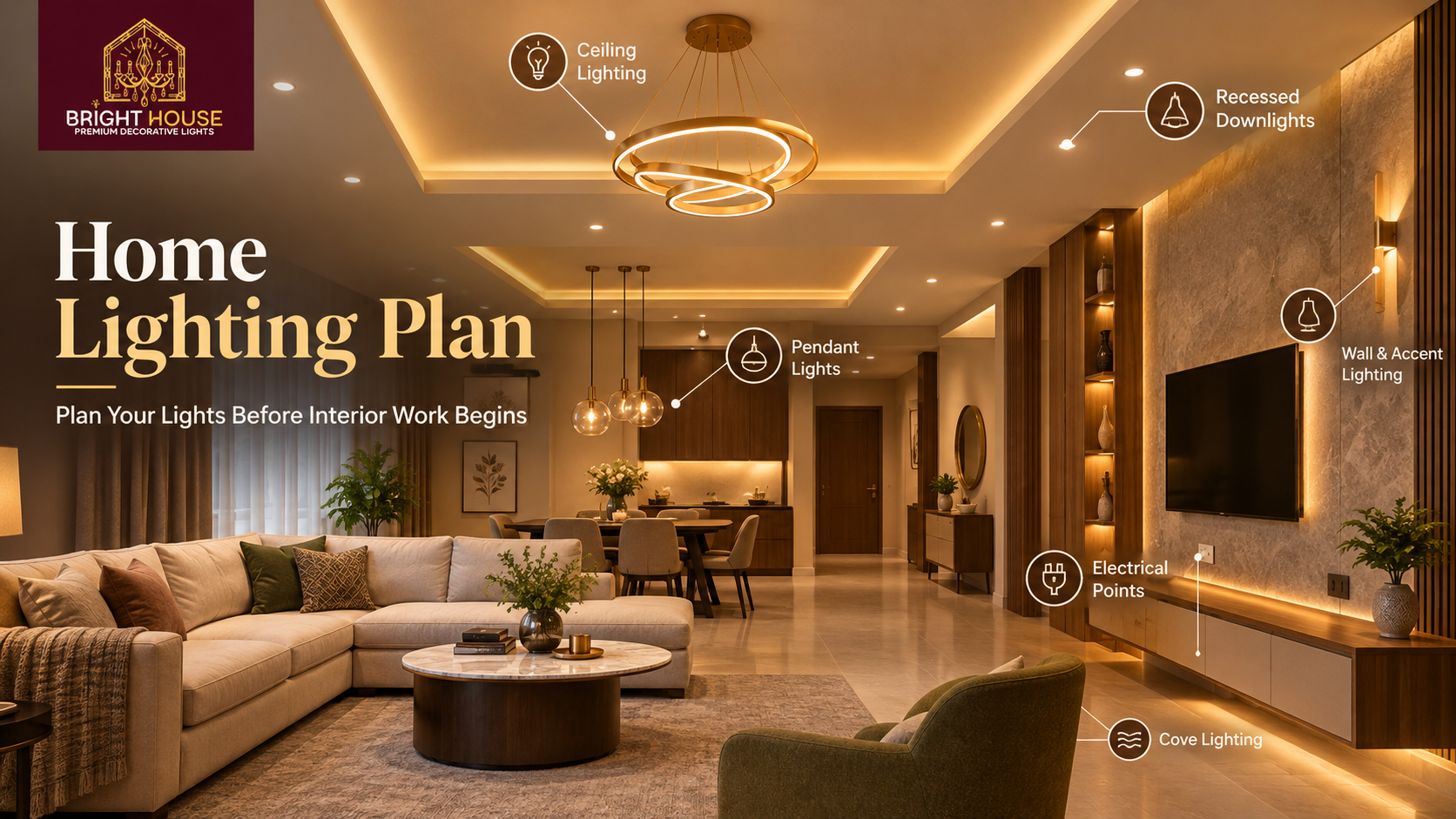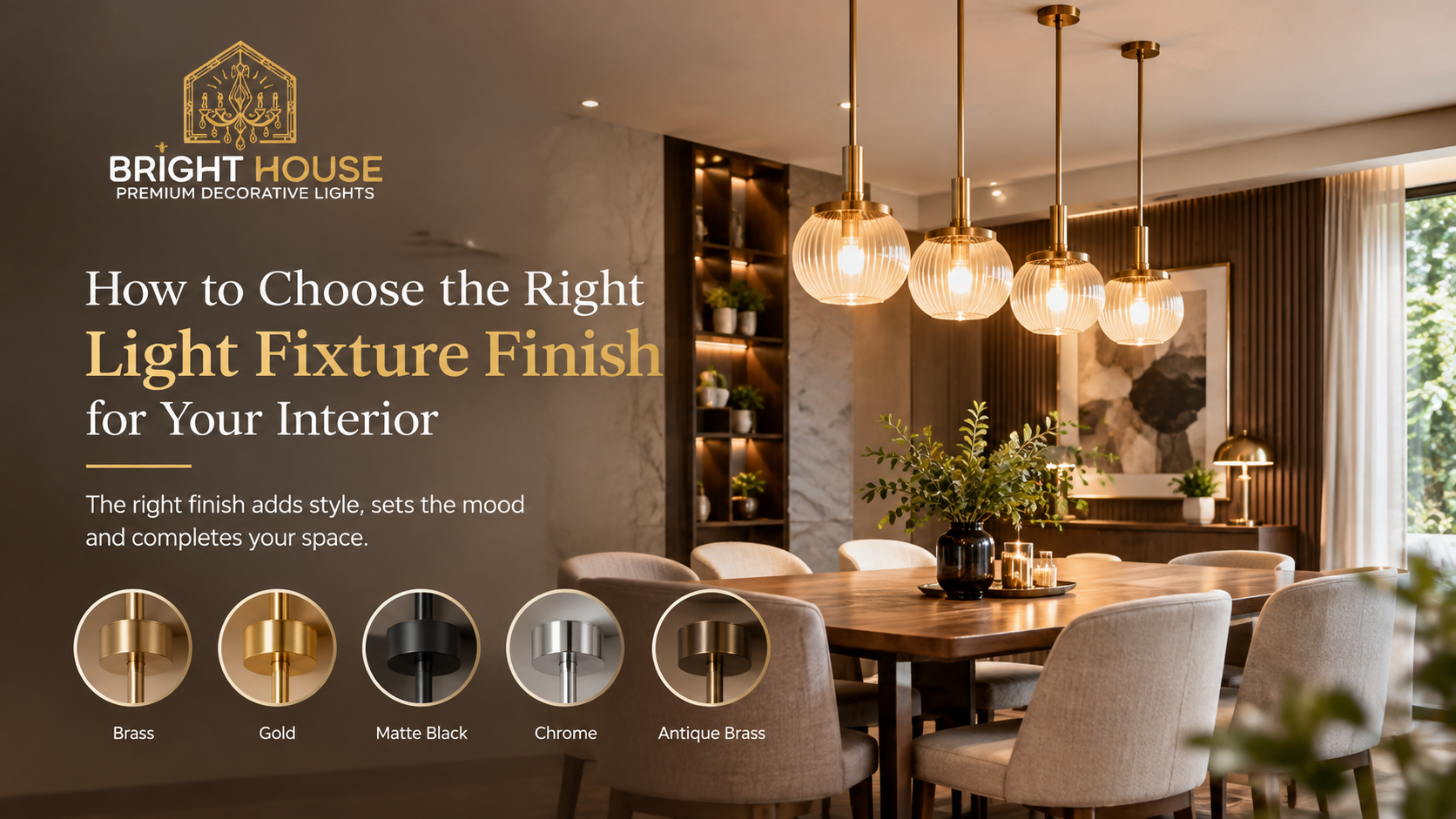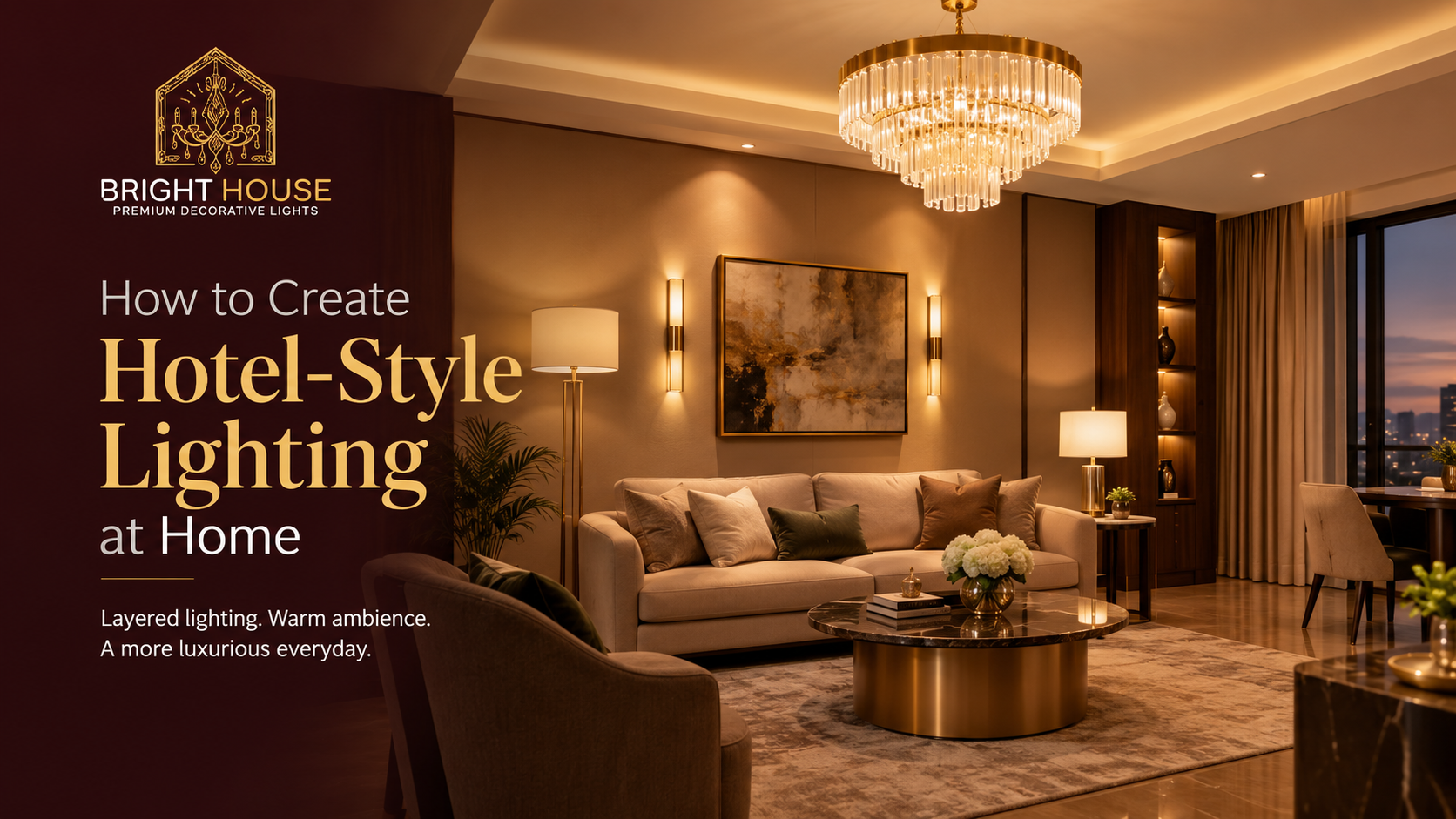
A home library should feel comfortable enough for long reading sessions while also making books, shelves and decorative objects part of the room's design. The right lighting can achieve both by combining ambient, task and accent lighting instead of relying on one bright ceiling fixture.
Whether you have a dedicated library, a compact reading nook or a wall of bookshelves in your living room, thoughtful home library lighting ideas can make the space more functional and visually inviting.
The key is to light three things properly: the room, the reading area and the books or objects you want to display.
What Are the Best Home Library Lighting Ideas?
The best home library lighting ideas combine soft ambient lighting with focused reading light and subtle shelf or display illumination.
A practical home library lighting plan can include:
- A ceiling light for general illumination
- A floor or table lamp beside the reading chair
- LED strips or profile lights inside bookshelves
- Wall lights for darker corners
- Picture lights for artwork and framed displays
- Adjustable spotlights for decorative objects
- Dimmable fixtures for different times of day
This layered approach gives you control over the atmosphere. You can use brighter lighting while searching for a book, focused light while reading and softer accent lighting when the library is being used as a relaxing space.
Bright House's guide to layered lighting explains how ambient, task and accent lighting can work together throughout a home.
Why Does a Home Library Need Layered Lighting?
A home library needs layered lighting because different areas have different lighting requirements.
The ceiling fixture provides general visibility, but it may not put enough light on a book page. A reading lamp solves that problem, while shelf lighting adds visual depth and helps individual books or decorative objects stand out.
Think of the lighting in three layers:
| Lighting layer | Purpose | Suitable fixtures |
|---|---|---|
| Ambient | General visibility | Ceiling lights, flush mounts, pendants |
| Task | Reading and detailed activities | Table lamps, floor lamps, reading lights |
| Accent | Bookshelves and displays | LED strips, spotlights, picture lights |
Using separate layers also reduces the temptation to make one fixture excessively bright.
How Should You Light a Home Library Reading Corner?
A reading corner should have a dedicated task light positioned close enough to illuminate the book without shining directly into the reader's eyes.
A floor lamp beside the reading chair is one of the easiest solutions. A table lamp works well when the chair is positioned beside a side table, while a wall-mounted reading light can save floor and table space.
When planning reading corner lighting, consider:
- The height of the chair
- The reader's usual position
- Whether the light can be adjusted
- The direction of the beam
- Glare from glossy book pages
- Shadows created by the reader's head or hands
- Whether the light can be dimmed
An adjustable lamp is particularly useful because different readers may prefer different positions and brightness levels.
The light should fall onto the page rather than directly into the reader's eyes. If you are right-handed, positioning the lamp slightly to the left can help reduce shadows created by your writing hand. Reverse the arrangement for left-handed users.
What Is the Best Colour Temperature for a Home Library?
Warm to neutral-warm lighting, generally around 2700K to 3000K, works well for many home libraries because it creates a comfortable atmosphere while maintaining useful visual clarity.
Colour temperature is measured in Kelvin. Lower values produce warmer-looking light, while higher values appear cooler.
For a library, you can use this as a practical starting point:
| Colour temperature | Appearance | Suitable use |
|---|---|---|
| 2700K | Warm and cosy | Relaxed evening reading |
| 3000K | Warm white | General library lighting |
| 3500K | Neutral | More functional reading areas |
| 4000K | Cool-neutral | Detailed work or study zones |
The Department of Energy identifies 2700K as a warm colour temperature commonly used in homes and libraries, while 3000K is also described as warm and pleasing.
For a library designed primarily for relaxation, 2700K to 3000K is a practical range. If the room doubles as a study or workspace, a slightly more neutral source may be useful.
The most important point is consistency. Avoid placing a very warm lamp beside a noticeably cool bookshelf light unless the contrast is intentional.
How Do You Light Bookshelves Without Creating Glare?
Bookshelves can be illuminated effectively by placing the light source above, inside or along the front edge of the shelving while keeping the LED source hidden from direct view.
LED strip lighting is particularly useful for built-in bookshelves because it can provide continuous illumination without taking up much shelf space.
For a cleaner result:
- Hide LED strips beneath shelf edges
- Use aluminium profiles where appropriate
- Diffuse the light to reduce visible hotspots
- Keep the light source away from direct eye level
- Position the beam toward the books rather than into the room
- Use separate switches or controls for display lighting
For tall bookshelves, vertical lighting can also create an attractive visual effect. However, avoid making every shelf excessively bright. The objective is to reveal the contents rather than turn the bookcase into the brightest object in the room.
Should You Use LED Lights for Bookshelves?
Yes. LED lighting is well suited to bookshelves because it is available in compact formats and can provide controlled illumination.
LED strips, recessed shelf lights, miniature spotlights and linear profiles can all work depending on the design of the bookcase.
When selecting LED lights for bookshelves, check:
- Lumens
- Colour temperature
- CRI
- Beam angle
- Dimming compatibility
- Driver quality
- Heat management
- Installation method
Brightness should be considered in lumens rather than wattage alone. Lumens describe the amount of visible light produced, while wattage describes electrical power consumption.
For a library containing artwork, wood, coloured book covers and decorative objects, colour rendering is also important. Bright House's guide to CRI explains why higher colour rendering can help colours and materials appear more naturally.
How Can You Light Book Displays and Decorative Objects?
Book displays look more intentional when the light is directed toward the objects rather than simply washing the entire wall.
If your library contains sculptures, framed photographs, plants, collectibles or other decorative pieces, consider using small adjustable spotlights or picture lights.
A useful display arrangement is:
Ambient light + shelf lighting + focused accent light
This creates visual hierarchy. The books remain visible, while selected objects receive slightly more attention.
For artwork, a dedicated picture light can provide a controlled beam across the artwork. For small sculptures, an adjustable spotlight can be positioned from above or from the side.
Avoid placing a spotlight directly in front of a glossy framed picture because it can produce reflections. Adjusting the angle slightly can often improve visibility.
How Bright Should a Home Library Be?
A home library should have enough light for comfortable movement and reading without making the entire room uniformly bright.
Instead of choosing one extremely powerful fixture, distribute the lighting across several sources.
As a practical planning approach:
| Library area | Lighting approach |
|---|---|
| Main room | Soft ambient lighting |
| Reading chair | Dedicated task light |
| Bookshelves | Low-level linear or strip lighting |
| Artwork | Focused accent lighting |
| Decorative objects | Adjustable spotlight |
| Desk | Dedicated task light |
The actual brightness requirement depends on room size, ceiling height, wall colour, daylight, furniture and the efficiency of the chosen fixtures.
The Department of Energy notes that lumens are the appropriate measure for light output when comparing lighting products. This makes lumens more useful than simply comparing wattage.
Where Should Ceiling Lights Be Placed in a Home Library?
Ceiling lights should be positioned to provide general illumination without creating strong shadows across bookshelves or reading areas.
A central ceiling fixture can work well in a compact library. Larger rooms may benefit from several recessed lights, a decorative pendant or a combination of ceiling fixtures.
Avoid positioning a single downlight directly behind a reading chair if it creates a strong shadow over the book.
For rooms with tall bookshelves, recessed spotlights can be angled toward the shelves. For rooms with lower ceilings, slim flush-mounted fixtures can provide ambient illumination without visually reducing the ceiling height.
The ceiling light should support the room rather than compete with the bookshelves.
Can Wall Lights Work in a Home Library?
Yes. Wall lights can provide useful secondary lighting while adding architectural character to the library.
They work particularly well:
- Beside reading chairs
- Between tall bookcases
- On either side of artwork
- Along darker walls
- Near a library desk
- In narrow reading areas
Wall lights are also useful when floor space is limited. A wall-mounted reading light can perform the task-lighting role without requiring a floor lamp.
Choose a fixture with controlled or diffused output if it will be positioned near eye level.
How Can You Make a Small Home Library Look Brighter?
A small library can feel brighter and more spacious when lighting is distributed across the room rather than concentrated in one location.
Try these techniques:
- Light the shelves softly.
Illuminated shelves create depth and reduce the appearance of dark wall surfaces. - Use a reading lamp.
A dedicated task light prevents the ceiling fixture from having to do all the work. - Choose suitable wall colours.
Lighter walls can reflect more light around the room. - Use dimmable fixtures.
This allows the lighting level to change according to the time of day. - Avoid excessive glare.
A bright exposed source can make a small room feel uncomfortable. - Use mirrors carefully.
A strategically positioned mirror can help distribute available light, particularly when daylight enters the room.
What Lighting Works Best for a Dark Bookshelf?
A dark bookshelf can benefit from concealed linear LED lighting positioned near the front or underside of each shelf.
The goal is to illuminate the book spines evenly without creating bright spots.
For dark wood shelving, warm white lighting around 2700K to 3000K can create a rich appearance. If the shelving contains colourful books and decorative objects, consider a good-quality LED with CRI 90 or above.
High-CRI lighting can be especially useful when the library contains artwork, wood, textiles or colourful objects. Bright House's CRI guide explains how colour rendering affects the appearance of these materials.
How Can You Avoid Common Home Library Lighting Mistakes?
Many library lighting problems come from positioning rather than from the fixture itself.
1. Using only one ceiling light
A single ceiling fixture may illuminate the room but leave the reading chair and shelves poorly lit.
Better approach: combine ambient, task and accent lighting.
2. Installing exposed LEDs
Visible LED points can create glare and distracting hotspots.
Better approach: use diffusers, profiles or concealed installation where appropriate.
3. Making shelf lighting too bright
Overly bright shelves can make the room feel harsh.
Better approach: treat shelf lighting as an accent layer.
4. Ignoring colour temperature
Mixing different white tones can make the library feel visually disconnected.
Better approach: keep the main lighting sources within a coordinated colour temperature range.
5. Choosing lights only by wattage
Wattage tells you about electrical power, not directly about the amount of light produced.
Better approach: compare lumens along with colour temperature, CRI and beam distribution.
6. Forgetting dimming
A library may be used during bright afternoons and quiet evenings.
Better approach: use dimmable fixtures or separate lighting circuits.
What Is a Practical Home Library Lighting Plan?
A practical home library can use four main lighting zones:
| Zone | Recommended lighting | Purpose |
|---|---|---|
| Ceiling | Ambient fixture | General visibility |
| Reading corner | Floor or table lamp | Focused reading |
| Bookshelves | Concealed LED | Book and shelf illumination |
| Displays | Spotlights or picture lights | Accent lighting |
If the room contains a desk, add a fifth zone with dedicated task lighting.
The advantage of zoning is flexibility. You do not need every light switched on at the same time.
For example, during the day, daylight and ambient lighting may be enough. In the evening, you can use the reading lamp and shelf lights while keeping the ceiling fixture dimmed.
How Can You Create a Cosy Home Library at Night?
For an evening library, use warm light, lower brightness and multiple small sources rather than one powerful fixture.
A cosy setup could include:
- A dimmed ceiling fixture
- A warm reading lamp
- Soft shelf illumination
- A wall light near the reading chair
- A small accent light for artwork or objects
This approach creates pockets of illumination throughout the room. It also allows the library to change from a functional reading space into a relaxed evening environment.
Home Library Lighting Ideas: Quick Checklist
Before finalising your lighting plan, check the following:
- Is the reading chair properly illuminated?
- Are the book spines easy to see?
- Are LED sources hidden or diffused?
- Are the main fixtures using a consistent colour temperature?
- Is the reading light adjustable?
- Can the lights be dimmed?
- Are artwork and decorative objects receiving suitable accent lighting?
- Is glare controlled?
- Are lumens being considered instead of wattage alone?
- Is the fixture style compatible with the furniture and architecture?
A successful library lighting plan should make the room easier to use while also supporting its visual character.
Final Thoughts
Good home library lighting ideas are not about making every corner equally bright. They are about deciding where light is needed and using different layers to support reading, browsing, relaxing and displaying your collection.
Start with comfortable ambient lighting, add dedicated task lighting at the reading chair, illuminate bookshelves with concealed LED sources and use accent lighting selectively for artwork and decorative objects.
For Indian homes, warm white lighting around 2700K to 3000K can create a comfortable library atmosphere, while good colour rendering can help books, wood, artwork and decorative finishes appear more natural.
The result is a home library that works during the day, feels comfortable in the evening and gives your book collection the attention it deserves.
Frequently Asked Questions
1. What is the best lighting for a home library?
A combination of ambient, task and accent lighting is generally the most practical approach. Use ceiling lighting for general visibility, a floor or table lamp for reading and concealed LED lighting for bookshelves.
2. What colour temperature is best for reading?
Around 2700K to 3000K is a practical choice for a comfortable home library. If the room is also used for detailed work, a more neutral colour temperature may be appropriate.
3. Are LED strip lights good for bookshelves?
Yes. LED strip lights can provide compact, continuous illumination along shelves. Use a diffuser or aluminium profile where appropriate to reduce hotspots and hide individual LED points.
4. How do you light a reading corner?
Place an adjustable floor lamp, table lamp or wall-mounted reading light near the chair. Position it so the light reaches the reading surface without shining directly into the reader's eyes.
5. What CRI should library lights have?
CRI 80 or above is a practical starting point for general interior lighting. CRI 90 or higher can be useful when the library contains artwork, colourful objects, wood or other finishes where colour appearance matters.