Luxury interiors are rarely defined by a single expensive fixture. What makes them feel sophisticated is the way every element works together, and lighting plays one of the most important roles.
A marble floor can look cold under harsh white light. Rich wood can appear almost black when illumination is concentrated on the floor. Artwork can lose its impact when there is no dedicated accent lighting. Even an impressive chandelier can feel disconnected if the rest of the room is poorly illuminated.
The solution is layered lighting design.
Instead of asking one ceiling fixture to illuminate an entire room, a luxury home lighting plan divides illumination into different layers, each with a specific purpose. The result is a space that can feel bright and functional during the day, warm and intimate in the evening, and visually impressive when entertaining guests.
Traditional layered lighting generally combines ambient, task and accent lighting. For a luxury home, however, the concept can be developed further into five complementary layers:
- Ambient lighting
- Task lighting
- Accent lighting
- Architectural lighting
- Decorative lighting
The key is not to install every type of light everywhere. It is to give each source a clear job.
What makes luxury home lighting different from ordinary lighting?
Luxury home lighting is different because it considers illumination as part of the interior architecture rather than treating lights as individual products.
A premium lighting scheme considers:
- Room proportions
- Ceiling height
- Furniture arrangement
- Wall and ceiling finishes
- Natural daylight
- Colour temperature
- Light distribution
- Beam angles
- Dimming
- Fixture finishes
- Artwork and architectural features
- The way each room is used
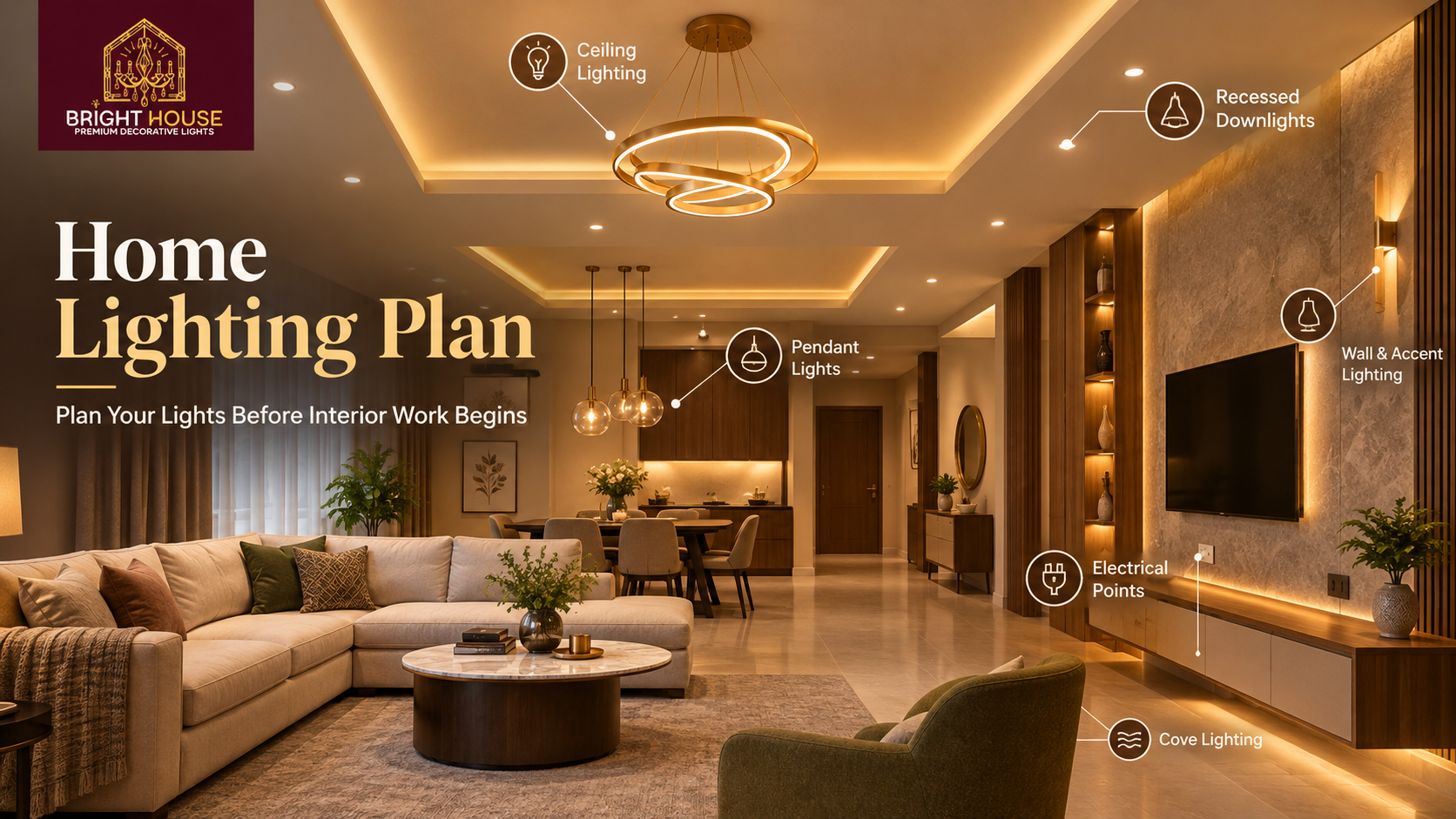
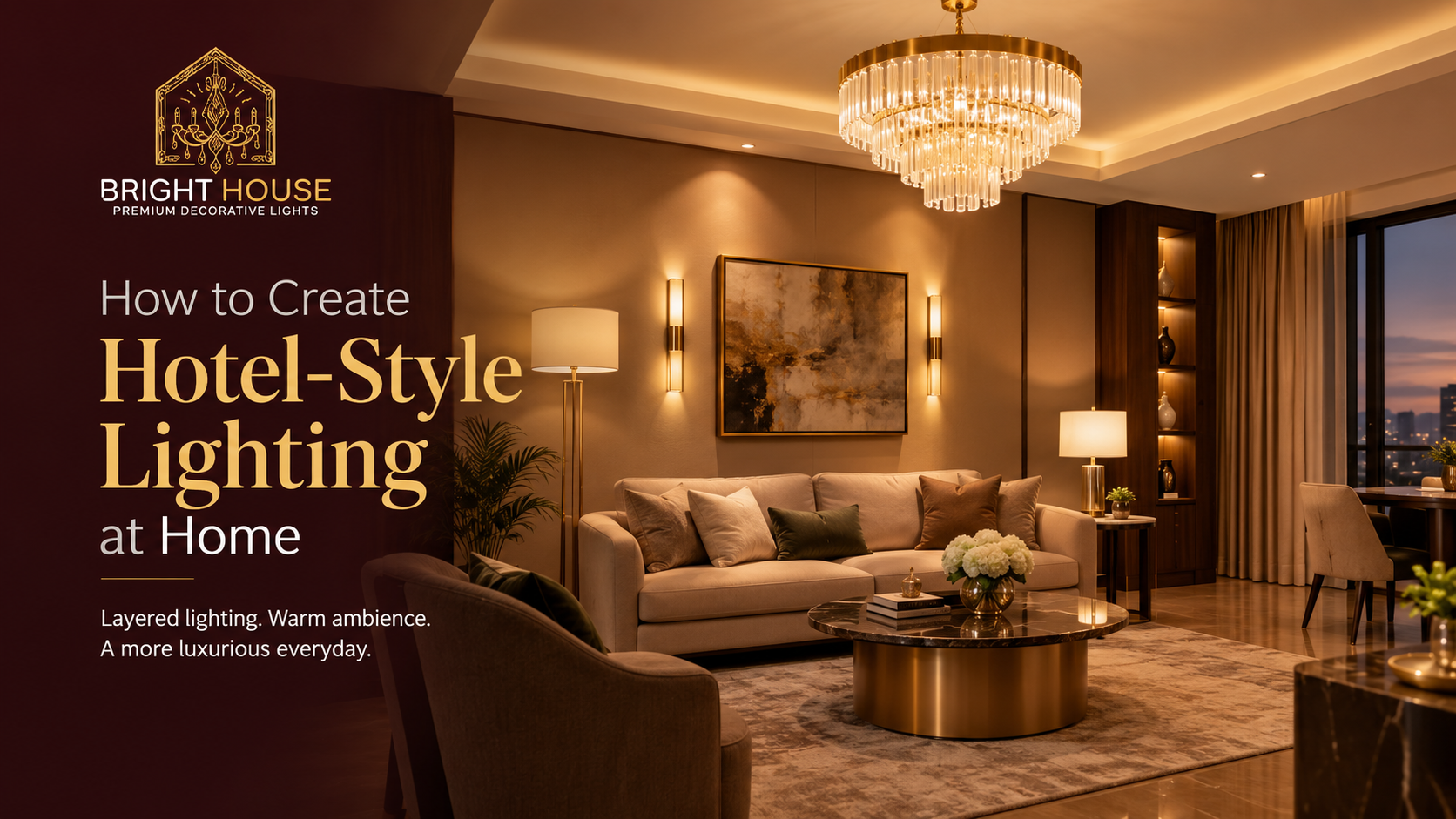
For example, a living room might use a chandelier as its visual centre, concealed lighting to wash the ceiling, wall lights to illuminate vertical surfaces, floor lamps near seating and spotlights directed towards artwork.
Each source contributes something different.
This approach is particularly important in luxury interiors because expensive materials need carefully controlled light to reveal their texture, colour and depth.
What are the five layers of a luxury home lighting plan?
The five layers are ambient, task, accent, architectural and decorative lighting. Combining them creates balanced illumination while allowing different lighting scenes for different activities and moods.
| Lighting layer | Main purpose | Suitable fixtures | Typical locations |
|---|---|---|---|
| Ambient | General illumination | Chandeliers, pendants, downlights | Ceiling and central areas |
| Task | Focused illumination | Table lamps, desk lamps, reading lights | Work and activity zones |
| Accent | Highlighting features | Spotlights, picture lights, wall lights | Art, décor and feature walls |
| Architectural | Enhancing architecture | Cove LEDs, profile lights, wall washers | Ceilings, niches, panels |
| Decorative | Visual personality | Sculptural pendants, sconces, lamps | Living, dining and bedrooms |
The layers should work independently but also look cohesive when switched on together.
1. How does ambient lighting create the foundation of a luxury interior?
Ambient lighting provides the basic illumination required to move comfortably around a room. In a luxury interior, it should create an even and comfortable foundation without making every surface equally bright.
Common ambient lighting options include:
- Chandeliers
- Pendants
- Recessed downlights
- Surface-mounted fixtures
- Cove lighting
- Large ceiling fixtures
- Indirect ceiling illumination
A common mistake is to make ambient lighting excessively bright. Luxury interiors generally benefit from controlled illumination with additional layers providing brightness where needed.
For a living room, a chandelier or pendant can provide the main visual source while recessed fixtures provide supporting illumination.
For a bedroom, a central decorative fixture can be combined with concealed ceiling lighting and bedside sources.
For dining areas, a chandelier or pendant positioned above the table can establish the main lighting zone.
How should you plan ambient lighting?
Start with the room dimensions and furniture layout before selecting fixtures.
For larger rooms, distribute ambient illumination rather than relying on one extremely powerful source. This reduces harsh shadows and gives you more flexibility when different parts of the room are being used.
Bright House's existing guide to living room lighting ideas for Indian homes also recommends combining central fixtures with wall lights, lamps and concealed lighting rather than depending on a single ceiling source.
2. How does task lighting make luxury spaces more functional?
Task lighting provides focused illumination for specific activities.
A beautiful interior still needs to work practically. Reading, working, cooking, dressing and applying makeup all require more concentrated light than general room illumination.
Examples include:
- A floor lamp beside a reading chair
- A desk lamp in a home office
- Under-cabinet lighting in a kitchen
- Bedside lamps
- Vanity lighting
- Pendant lights above an island
- Reading lights beside a bed
The important principle is to position task lighting where the activity actually happens.
A common mistake is to make the ceiling brighter instead of adding focused illumination to the work area.
What are good task-lighting ideas for luxury homes?
Living room: Floor lamps beside reading chairs or sofas.
Kitchen: Under-cabinet lighting combined with suitable ceiling illumination.
Bedroom: Bedside lamps or adjustable reading lights.
Home office: A desk lamp combined with comfortable ambient illumination.
Dressing area: Vertical lighting around mirrors to reduce unwanted facial shadows.
The task layer should make the room more useful without overpowering its decorative character.
3. How does accent lighting make a luxury interior look more expensive?
Accent lighting directs attention towards specific objects, materials or architectural elements.
This is one of the most powerful techniques in luxury interior lighting because it controls where the eye goes.
You can use accent lighting to highlight:
- Paintings
- Sculptures
- Textured walls
- Marble surfaces
- Decorative niches
- Bookcases
- Plants
- Architectural columns
- Feature walls
- Statement furniture
For artwork, adjustable spotlights and dedicated picture lights can create a stronger visual focus than general ceiling illumination. Bright House's guide to lighting for paintings and sculptures recommends dedicated and adjustable lighting to avoid flat or excessive illumination.
How much accent lighting should you use?
Not everything needs to be highlighted.
A luxury interior usually looks more sophisticated when there is a hierarchy.
For example:
- One large artwork receives stronger emphasis.
- Smaller decorative pieces receive softer illumination.
- A feature wall gets controlled wall washing.
- Background areas remain slightly darker.
This creates contrast and visual depth.
If every wall, object and cabinet is equally bright, nothing feels special.
4. How does architectural lighting enhance a luxury interior?
Architectural lighting integrates illumination into the structure of the home.
Instead of seeing the light source first, you notice the effect it creates.
Popular architectural lighting techniques include:
- Cove lighting
- Recessed profile lighting
- Concealed LED strips
- Wall washing
- Cabinet lighting
- Shelf lighting
- Floor-level illumination
- Ceiling perimeter lighting
- Recessed architectural fixtures
Architectural lighting works particularly well with contemporary luxury interiors because it can emphasise clean lines and materials without adding visual clutter.
Where should architectural lighting be used?
False ceilings: Cove or concealed lighting can create a soft ceiling glow.
Wall panels: Linear lighting can emphasise texture and geometry.
Bookcases: LED profiles can illuminate shelves while creating depth.
TV walls: Low-level concealed illumination can reduce the harsh contrast around screens.
Staircases: Step and wall lighting can improve both safety and visual drama.
Niches: Concealed lighting can turn a simple niche into a decorative focal point.
The goal is not to make the LED strip itself visible. Ideally, you notice the illuminated surface rather than the light source.
5. How does decorative lighting complete a luxury home?
Decorative lighting is where function and personality meet.
A sculptural chandelier, artistic pendant or beautifully finished wall sconce can act almost like a piece of interior décor.
Decorative lighting can include:
- Crystal chandeliers
- Sculptural chandeliers
- Designer pendants
- Decorative wall lights
- Table lamps
- Floor lamps
- Artistic sconces
- Statement ceiling fixtures
This layer is especially important in luxury interiors because fixtures can become part of the home's visual identity.
How should decorative lighting be selected?
Choose the fixture according to the entire room rather than buying the most impressive product individually.
Consider:
- Furniture scale
- Ceiling height
- Wall finishes
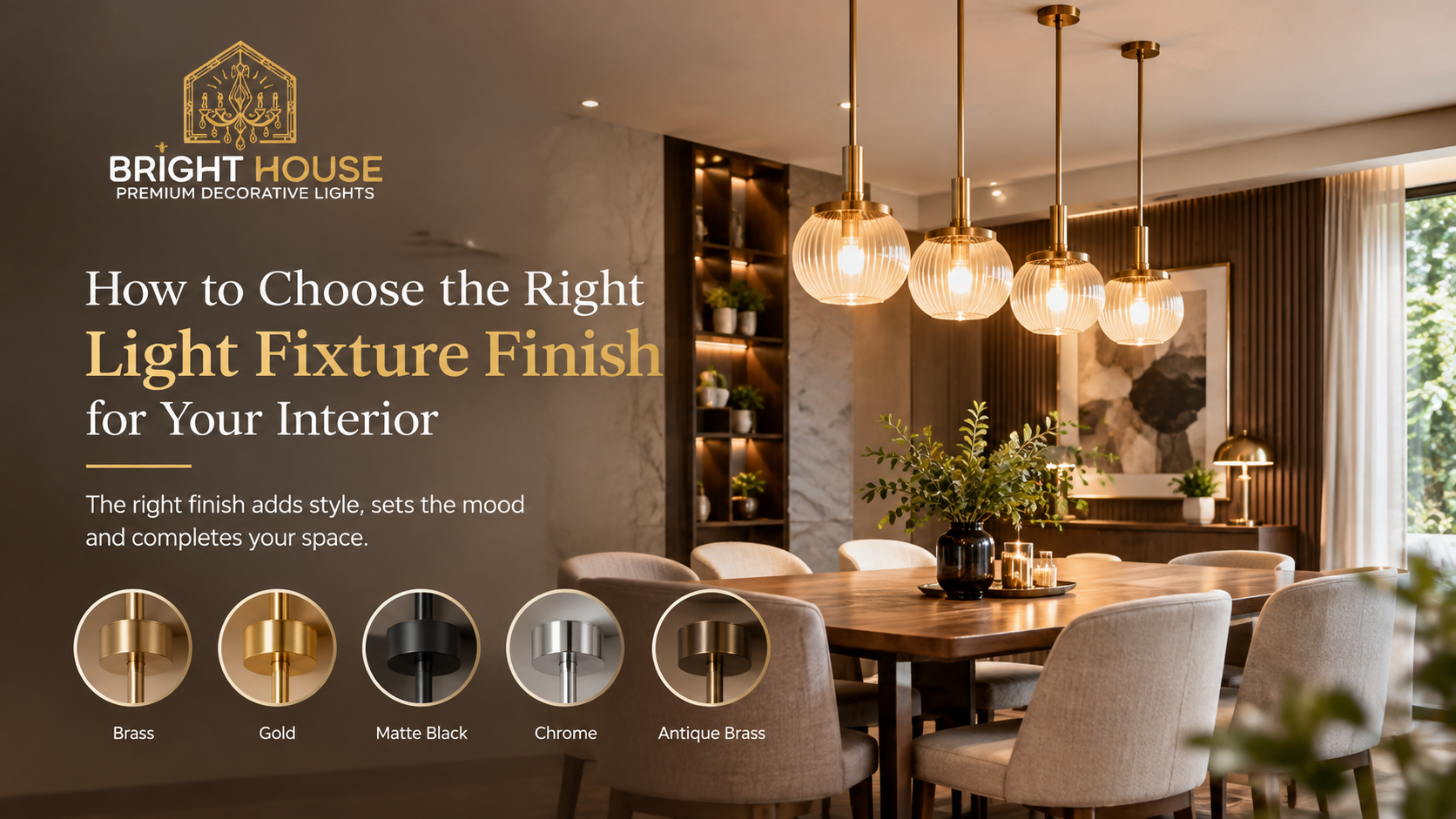
- Metal finishes
- Room proportions
- Existing architectural details
- Visual weight
- Colour temperature
For example, a large chandelier may work beautifully in a double-height living room but overwhelm a compact bedroom.
For chandelier proportions, use Bright House's chandelier size guide as a starting point. The guide recommends using room dimensions, ceiling height, furniture proportions and fixture visual weight together rather than relying on size alone.
How do you combine the five lighting layers in a living room?
A luxury living room should generally combine all five layers without making the room feel overloaded.
A practical arrangement could be:
| Zone | Lighting layer | Suggested fixture |
|---|---|---|
| Centre | Ambient | Chandelier or pendant |
| Ceiling | Architectural | Cove or profile lighting |
| Sofa | Task | Floor or reading lamp |
| Feature wall | Accent | Adjustable spotlights |
| Side table | Decorative | Table lamp |
| Artwork | Accent | Picture light |
| TV wall | Architectural | Concealed LED |
| Dark corners | Ambient/accent | Wall lights |
The central chandelier establishes the room's identity, while the other layers provide flexibility.
During the day, natural daylight may do most of the work.
In the evening, the ambient layer can be dimmed while decorative and accent sources become more prominent.
For entertaining, more layers can be activated.
For a quiet evening, only a few low-level sources may be required.
What colour temperature works best for luxury interiors?
Warm white light generally works well in living rooms, bedrooms and dining spaces because it creates a comfortable atmosphere and complements materials such as wood, brass, stone and fabric.
A useful starting point is:
| Space | Suggested colour temperature |
|---|---|
| Living room | 2700K to 3000K |
| Bedroom | 2700K to 3000K |
| Dining room | 2700K to 3000K |
| Foyer | 2700K to 3000K |
| Kitchen task areas | 3000K to 4000K |
| Home office | Around 3000K to 4000K |
| Utility areas | 3500K to 4000K |
The U.S. Department of Energy explains that colour temperature is measured in Kelvin and that lower Kelvin values produce warmer-looking light, while lumens are the appropriate measure of light output rather than wattage.
For a luxury home, consistency is important. Mixing noticeably warm and cool light sources in the same visual zone can make the interior look fragmented.
Why are dimmers essential in a luxury lighting plan?
Dimmers allow the same room to perform different functions without changing its fixtures.
A living room might need:
Morning: Moderate ambient lighting with daylight.
Afternoon: Minimal artificial lighting.
Evening: Balanced ambient and task lighting.
Dinner: Reduced ambient lighting with decorative and accent sources.
Late evening: Low-level accent and architectural lighting.
This flexibility is one of the easiest ways to make a sophisticated lighting system feel premium.
However, the fixture, LED driver and dimming system need to be compatible. Not every integrated LED fixture supports every dimmer.
How should you plan lighting before starting an interior project?
Lighting should be planned before the ceiling and electrical work is finalised.
Use this sequence:
1. Map the furniture
Mark sofas, beds, dining tables, desks, cabinets and circulation paths.
2. Identify focal points
Decide which artwork, architectural feature, furniture piece or material deserves attention.
3. Create the five layers
Determine where ambient, task, accent, architectural and decorative lighting will be used.
4. Plan electrical points
Mark ceiling points, wall-light points, switches, dimmers and concealed LED locations.
5. Select fixtures
Only after the lighting layout is clear should you choose the actual fixtures.
6. Create separate circuits
Avoid connecting every fixture to one switch.
7. Test before final installation
Check beam angles, glare, shadows, colour temperature and illumination levels.
This process can prevent expensive changes after the interior is complete.
What lighting mistakes can make a luxury interior look cheap?
Even expensive fixtures can produce an ordinary-looking interior when the overall lighting strategy is poor.
Avoid these mistakes:
- Installing too many downlights
- Making every light equally bright
- Using only ceiling lighting
- Mixing colour temperatures randomly
- Exposing LED strips
- Ignoring glare
- Choosing oversized fixtures without measuring
- Installing decorative lights without considering furniture scale
- Using poor-quality light sources for artwork
- Forgetting dimmers
- Placing spotlights directly where people look
- Ignoring ceiling fan positions
- Treating the false ceiling as structural support for heavy fixtures
Bright House's recent guide on lighting mistakes that can make expensive interiors look cheap also highlights excessive downlights, inconsistent colour temperatures, exposed LEDs and poorly positioned spotlights as common problems.
What is the ideal five-layer lighting plan for different rooms?
The five layers can be adapted according to how each room is used.
| Room | Ambient | Task | Accent | Architectural | Decorative |
|---|---|---|---|---|---|
| Living room | Chandelier | Floor lamp | Artwork spots | Cove lighting | Table lamp |
| Bedroom | Ceiling fixture | Bedside light | Artwork | Headboard LED | Pendant |
| Dining room | Chandelier | Table pendant | Wall feature | Cove lighting | Statement fixture |
| Kitchen | Ceiling lights | Under-cabinet LEDs | Display lighting | Cabinet profiles | Decorative pendant |
| Home office | Ceiling light | Desk lamp | Shelves | Backlighting | Desk lamp |
| Foyer | Ceiling fixture | Console light | Artwork | Wall washing | Statement chandelier |
| Home library | Ceiling fixture | Reading lamp | Bookshelves | Shelf lighting | Table lamp |
Not every room needs every layer at the same intensity. The five-layer framework is a planning tool, not a requirement to install five separate fixtures.
How can you make luxury home lighting more energy efficient?
Luxury does not have to mean excessive energy consumption.
LED technology allows homeowners to create sophisticated lighting schemes with efficient sources. The U.S. Department of Energy notes that LED lighting can provide high light output with comparatively low power consumption, while dimming and controls can further improve efficiency.
Consider:
- LED fixtures
- Dimmable lighting
- Occupancy sensors in appropriate areas
- Daylight-responsive controls
- Separate lighting circuits
- Timers for selected areas
- Efficient architectural profiles
- Switching off decorative layers when they are unnecessary
The best luxury lighting system is not the one with the most fixtures. It is the one that gives you control over where, when and how much light you use.
A simple checklist for planning luxury home lighting
Before finalising your lighting design, check:
- Furniture layout is finalised
- Ceiling height has been measured
- Chandelier dimensions have been calculated
- Ambient lighting is distributed properly
- Task lighting is positioned at activity zones
- Artwork has dedicated accent lighting where needed
- Architectural lighting is concealed where appropriate
- Decorative fixtures complement the furniture
- Colour temperatures are coordinated
- CRI has been considered
- Dimmers are compatible with the fixtures
- Electrical circuits are separated
- Ceiling fan positions have been considered
- Heavy fixtures have suitable structural support
- Glare has been checked
- Maintenance access has been considered
Final Thoughts
A luxury home is not made luxurious by brightness alone. It is created through control, proportion, material quality and atmosphere.
The five-layer approach gives every light a purpose:
Ambient lighting establishes the foundation.
Task lighting makes spaces functional.
Accent lighting directs attention.
Architectural lighting reveals the structure.
Decorative lighting adds personality.
When these layers are coordinated, the result is more than an illuminated room. It is an interior that changes naturally throughout the day and feels comfortable, dramatic and refined after dark.
The most effective approach is to plan the lighting alongside the interior design rather than treating it as the final step. Measure the room, map the furniture, identify focal points, select the lighting layers and only then choose the fixtures.
That is the foundation of successful luxury home lighting.
Frequently Asked Questions
1. What are the five layers of lighting in a luxury home?
The five layers are ambient, task, accent, architectural and decorative lighting. Together they provide general illumination, functional light, visual emphasis, architectural depth and decorative character.
2. Is layered lighting necessary for a luxury interior?
Yes. Layered lighting provides greater control, depth and flexibility than relying on a single ceiling fixture. It also helps highlight premium materials, furniture and artwork.
3. What colour temperature is best for luxury home lighting?
For most living rooms, bedrooms and dining areas, 2700K to 3000K warm white is a practical starting point. Kitchens and work areas may benefit from a somewhat cooler temperature.
4. Should luxury home lighting always include a chandelier?
No. A chandelier is useful where its scale and style suit the room, but pendants, wall lights, architectural lighting and other fixtures can create equally sophisticated results.
5. How many lights should a luxury living room have?
There is no fixed number. Instead of counting fixtures, plan according to the five lighting layers and the room's activities, furniture and focal points.