Choosing the right ceiling lighting can be confusing when downlights, spotlights and track lights look similar in product photos but perform very different jobs. Understanding the difference between them can help you create better ambient lighting, task lighting and accent lighting without filling your ceiling with unnecessary fixtures.
The key difference is simple: downlights usually provide broader downward illumination, spotlights provide focused directional light, and track lights give you adjustable directional lighting along a track.
For Indian homes, the right choice also depends on ceiling height, room size, false ceiling design, furniture layout, artwork, beam angle and the amount of flexibility you need.
This guide explains downlights vs spotlights vs track lights, where each type works best, their advantages and limitations, and how to combine them for a balanced home lighting design.
What Is the Difference Between Downlights, Spotlights and Track Lights?
The main difference is how each fixture distributes light and how much control you have over its direction.
| Lighting type | Light direction | Main purpose | Best suited for |
|---|---|---|---|
| Downlight | Mostly downward | General illumination | Living rooms, bedrooms, kitchens |
| Spotlight | Focused and directional | Accent or task lighting | Artwork, niches, displays |
| Track light | Adjustable along a track | Flexible directional lighting | Art walls, open layouts, changing furniture |
| Recessed spotlight | Directional from ceiling | Clean accent lighting | Modern interiors and feature walls |
| Track spotlight | Directional from track | Flexible accent lighting | Multiple objects or zones |
A downlight is generally chosen when you need useful illumination across an area. A spotlight is selected when you want the light to fall on a particular object or surface. Track lights add another level of flexibility because the fixtures can usually be adjusted or repositioned along the track.
The three can also work together. A living room, for example, might use downlights for general visibility, spotlights for artwork and track lights for a flexible feature wall.
What Are Downlights and How Do They Work?
Downlights are ceiling-mounted fixtures that direct light primarily downward. Many modern downlights are recessed into a false ceiling, although surface-mounted versions are also available.
Their relatively broad distribution makes them useful for general room illumination.
Typical applications include:
- Bedrooms
- Living rooms
- Kitchens
- Passageways
- Bathrooms
- Home offices
- Dressing areas
A recessed downlight can create a clean ceiling appearance because much of the fitting is hidden above the ceiling surface.
However, installing too many downlights in a regular grid can create excessive brightness and visual clutter. It can also produce unwanted shadows depending on where the fixtures are positioned relative to furniture and people.
For this reason, downlights should be planned around the room rather than simply spaced at equal distances.
What Are Spotlights and When Should You Use Them?
Spotlights are designed to produce a more concentrated beam of light toward a particular area or object.
Unlike a general-purpose downlight, a spotlight can be aimed at something specific.
Common applications include:
- Paintings
- Sculptures
- Decorative walls
- Shelves
- Display cabinets
- Architectural features
- Dining tables
- Reading areas
- Decorative niches
Spotlights are particularly useful for accent lighting because they help direct attention toward selected features.
For example, if you have a painting above a console, a properly positioned spotlight can illuminate the artwork while leaving the surrounding wall slightly darker.
Bright House's guide to lighting artwork also recommends adjustable spotlights and track lights for paintings and sculptures because they provide more control over the direction of light.
A spotlight does not automatically make a room better lit. Its effectiveness depends on the beam angle, mounting position, brightness and aiming direction.
What Are Track Lights and Why Are They Different?
Track lights consist of a track or rail with individual light fixtures mounted along it.
The major advantage is flexibility. Depending on the system, individual heads can be rotated, aimed or repositioned to illuminate different areas.
Track lighting is especially useful when:
- Furniture may be rearranged
- Artwork changes periodically
- Several objects need individual illumination
- You want flexible accent lighting
- You do not want multiple separate ceiling points
- You have an open-plan room
Modern magnetic track systems provide even more flexibility. Bright House's current guide explains that magnetic track modules can be moved, swapped or added along the rail, depending on the system.
Track lights are therefore particularly useful when you want directional lighting without committing every fixture to a fixed ceiling position.
Downlights vs Spotlights: What Is the Main Difference?
The main difference between downlights and spotlights is light distribution.
Downlights generally spread light across a larger area, while spotlights concentrate light into a more controlled beam.
| Feature | Downlights | Spotlights |
|---|---|---|
| Beam distribution | Generally wider | Generally narrower |
| Direction | Mostly downward | Adjustable or directional |
| Primary use | Ambient lighting | Accent or task lighting |
| Best for | General room illumination | Specific objects or surfaces |
| Flexibility | Limited after installation | Higher |
| Visual effect | Even illumination | Highlights and contrast |
| Typical installation | Recessed or surface ceiling | Recessed, surface or track-mounted |
This does not mean every downlight has a wide beam or every spotlight has a narrow beam. Product specifications vary considerably.
The beam angle should therefore be checked before purchasing.
What Is Beam Angle and Why Does It Matter?
Beam angle describes how widely light spreads from a fixture.
A narrower beam concentrates light into a smaller area, while a wider beam spreads light across a larger surface.
For example:
- Narrow beams can highlight artwork or decorative objects.
- Medium beams can illuminate seating areas.
- Wide beams can provide broader room illumination.
- Wall-washing fixtures spread light across larger vertical surfaces.
The correct beam angle depends on the distance between the light and the surface being illuminated.
A narrow spotlight placed too close to a large wall can create an obvious bright patch instead of even illumination. A very wide beam aimed at a small sculpture may lose the focused effect you want.
This is why fixture selection should happen after the room layout is understood.
Track Lights vs Spotlights: Which One Gives More Flexibility?
Track lights generally provide more flexibility because multiple fixtures share a common track and can be adjusted along that system.
A conventional spotlight installed at a fixed ceiling point has a permanent electrical location. You may be able to rotate or tilt the fixture, but its mounting point remains fixed.
Track lighting offers additional flexibility for spaces where the layout can change.
| Situation | Spotlight | Track light |
|---|---|---|
| One painting | Excellent | Good |
| Multiple paintings | Good | Excellent |
| Changing displays | Limited | Excellent |
| Fixed architectural feature | Excellent | Good |
| Flexible furniture layout | Moderate | Excellent |
| Minimal ceiling appearance | Excellent | Depends on track design |
For a single permanent feature, a recessed spotlight may be enough.
For several objects spread across a wall, track lighting can make aiming much easier.
Which Lighting Is Best for a Living Room?
A living room usually benefits from a combination rather than one fixture type.
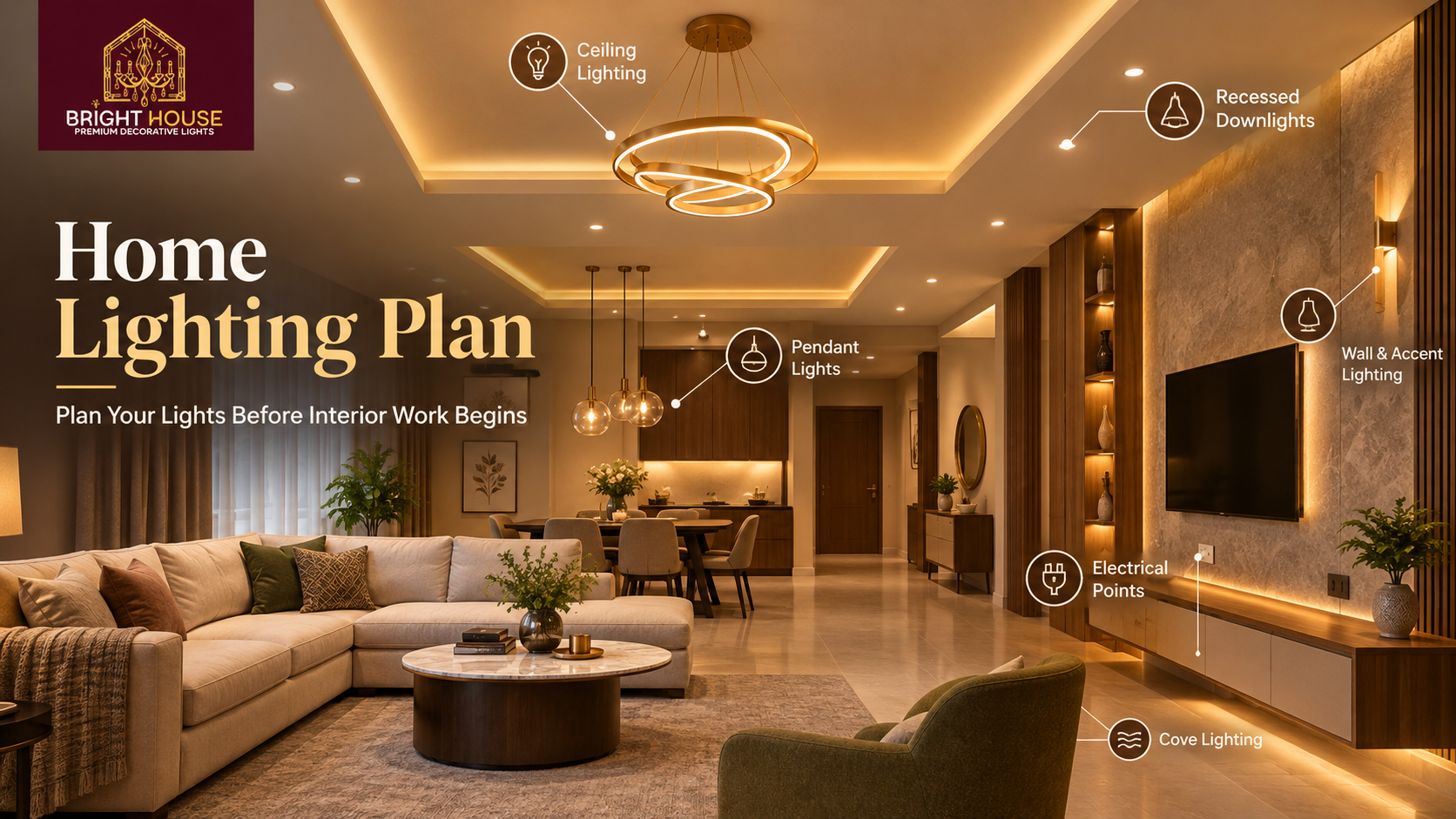
Downlights can provide general illumination, while spotlights or track lights can highlight artwork, shelves, textured walls or architectural features.
A practical living room lighting plan could include:
- Downlights for general illumination
- A chandelier or pendant as the main visual feature
- Spotlights for artwork
- Track lights for flexible accent lighting
- Floor or table lamps for lower-level lighting
- Cove lighting for soft architectural illumination
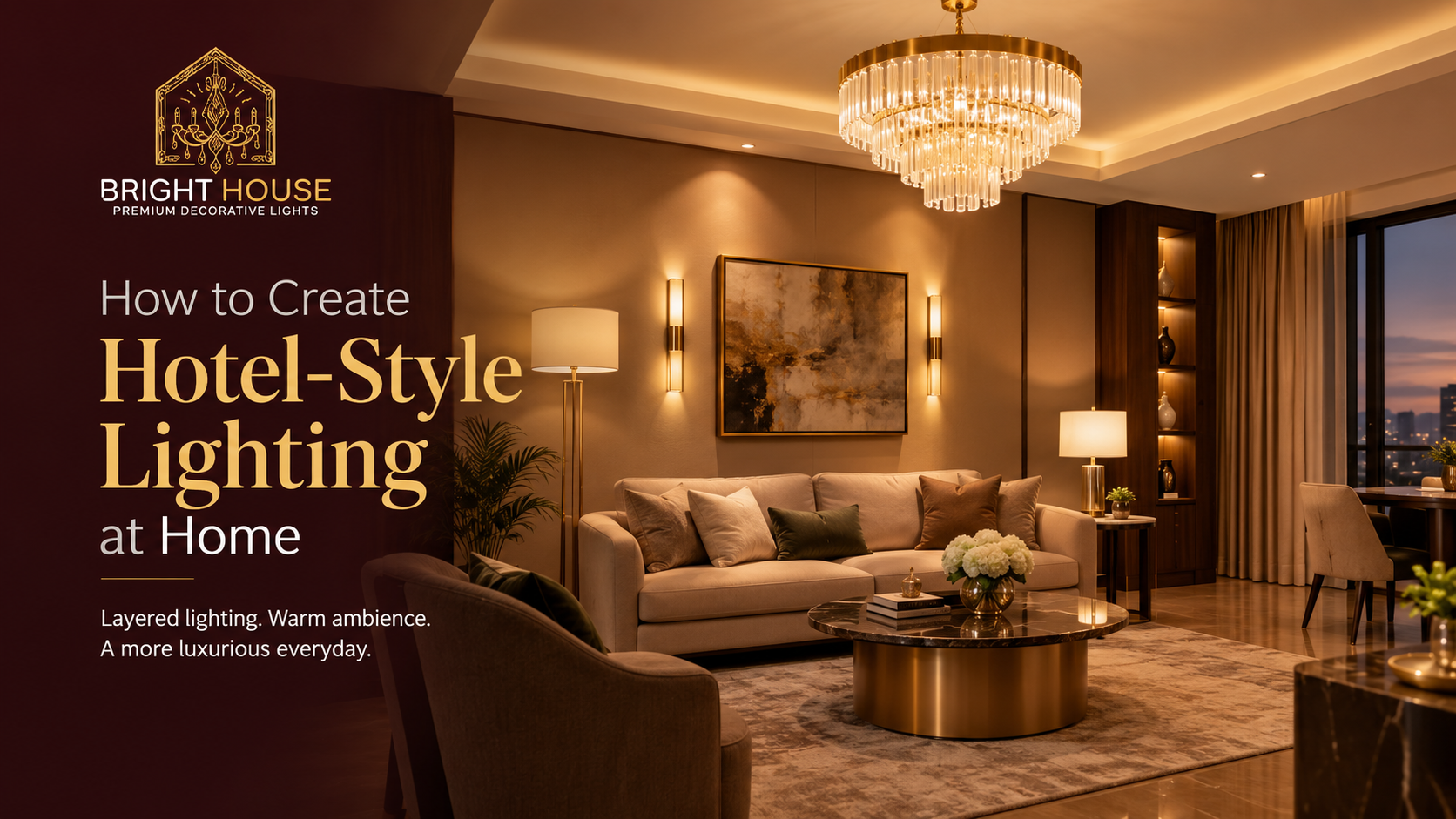
Bright House's living room lighting guide recommends a layered approach using ambient, task and accent lighting rather than depending on a single ceiling fixture.
The goal is to distribute light throughout the room without making every area equally bright.
Which Is Better for a Bedroom: Downlights or Spotlights?
Downlights are generally more useful as a primary ceiling lighting source in bedrooms because bedrooms usually need comfortable, relatively even illumination.
Spotlights can still be useful for specific areas such as:
- Wardrobes
- Dressing tables
- Artwork
- Reading areas
- Architectural niches
Avoid positioning a powerful spotlight directly over the pillow or in a location where the source is constantly visible while lying in bed.
Bedrooms often benefit from warmer colour temperatures around 2700K to 3000K, particularly when the lighting is intended for evening use.
Using dimmable fixtures can also make the bedroom more adaptable.
Which Lighting Is Better for a Kitchen?
Kitchens usually need a combination of ambient and task lighting.
Downlights can provide general illumination, but the position of the light matters. If the fixture is directly behind the person working at a counter, their body can cast a shadow onto the work surface.
Spotlights can be useful for specific areas, while track lights can work well in open kitchens where several work zones need directional lighting.
Consider using:
- Downlights for general illumination
- Under-cabinet lighting for counters
- Spotlights for display areas
- Track lights for islands or open layouts
- Pendant lights above dining or breakfast counters
The objective is to put light where work actually happens rather than simply increasing the number of ceiling fixtures.
Are Spotlights Better for Artwork?
Spotlights are particularly useful for artwork because their direction can be controlled.
For paintings, the light should reach the artwork at an angle that reduces unwanted reflections, especially when the artwork has glass or a glossy finish.
Useful considerations include:
- Beam angle
- Mounting distance
- Light intensity
- Colour temperature
- CRI
- Viewing angle
- Artwork size
- Frame depth
For several artworks, track lighting can provide greater flexibility because individual heads can be aimed at different pieces.
Bright House's guide to lights for paintings on wall covers spotlight, track lighting and wall-washing approaches for artwork.
What About False Ceilings?
Downlights and recessed spotlights are particularly popular with false ceilings because the ceiling cavity can accommodate the fixture body and wiring.
However, recessed fixtures require sufficient ceiling depth and should be planned before the false ceiling is constructed.
Track lighting can be:
- Surface mounted
- Recessed
- Suspended
- Magnetically mounted, depending on the system
If you are using a false ceiling, decide the fixture positions before the ceiling work is completed.
This is especially important for recessed lighting because moving a fixture later can involve cutting and repairing the ceiling.
For concealed architectural lighting, Bright House's guide to cove lighting explains how ceiling depth, setback and strip positioning affect the result.
Can You Use Downlights and Spotlights Together?
Yes. Combining them is often more effective than choosing one type for the entire room.
Think of them as different layers.
Downlights: provide general illumination.
Spotlights: create focused highlights.
Track lights: provide flexible directional lighting.
Decorative fixtures: provide a visual focal point.
Lamps and wall lights: provide lower-level illumination.
For example, a living room might have six carefully positioned downlights, two adjustable spotlights aimed at artwork and a floor lamp near the sofa.
This can create more visual depth than installing twelve identical ceiling lights.
How Should You Choose Between Downlights, Spotlights and Track Lights?
Start with the purpose of the light rather than the appearance of the fixture.
Ask these questions:
1. Do you need general illumination?
Choose downlights or another broad ambient source.
2. Do you need to highlight something specific?
Consider a spotlight.
3. Do you need flexibility?
Consider track lighting.
4. Is the ceiling already finished?
Surface-mounted options may be easier than recessed fixtures.
5. Will the room layout change?
Track lighting may offer more flexibility.
6. Are you lighting artwork?
Look for adjustable directional fixtures with suitable beam angles and good colour rendering.
7. Is glare a concern?
Avoid placing bright directional fixtures directly in normal sightlines.
8. Do you need a clean minimalist ceiling?
Recessed downlights or recessed spotlights can reduce visible hardware.
What Colour Temperature Should You Choose?
Colour temperature affects how the room feels as much as the fixture itself.
A practical starting point for many Indian homes is:
| Colour temperature | Typical appearance | Suitable areas |
|---|---|---|
| 2700K | Very warm | Bedrooms, relaxed spaces |
| 3000K | Warm white | Living rooms, bedrooms, dining |
| 3500K | Neutral | Transitional areas |
| 4000K | Cooler white | Kitchens, work areas |
| 5000K+ | Very cool | Specialised applications |
The ideal choice depends on the room, finishes and personal preference.
Try to avoid mixing dramatically different colour temperatures within the same visual area unless the difference is intentional.
Does CRI Matter When Choosing Spotlights and Downlights?
Yes. CRI, or Colour Rendering Index, describes how accurately a light source reveals colours compared with a reference source.
This is especially important for:
- Artwork
- Wood
- Fabric
- Marble
- Decorative finishes
- Skin tones
- Paint colours
A high-CRI fixture can make colours appear more natural.
For rooms where colour appearance matters, look beyond wattage and check the fixture's CRI specification.
Bright House's recent guide on CRI and home lighting explains why colour rendering can significantly affect how interior materials and artwork appear under artificial light.
What Are the Most Common Lighting Mistakes?
Choosing the wrong fixture is not always the problem. Incorrect placement can make even a good fixture perform poorly.
Using too many downlights
A dense ceiling grid can make a room look visually busy and create unnecessary glare.
Using spotlights everywhere
Spotlights are directional. Using them as the only light source can leave some areas too bright and others too dark.
Installing track lights without a plan
A track should support the room layout. Simply installing a long track and pointing every head randomly can create uneven lighting.
Ignoring beam angle
The wrong beam angle can produce hotspots or insufficient coverage.
Focusing only on wattage
Wattage describes energy consumption, not the complete lighting performance.
Ignoring CRI
Low colour rendering can make artwork, wood and fabrics look different from how they appear under natural light.
Forgetting glare
A bright fixture within the normal line of sight can be uncomfortable even when the room is technically well illuminated.
Which One Should You Choose?
There is no single fixture type that works for every room.
Instead, match the fixture to the job.
| Your requirement | Suitable option |
|---|---|
| General room lighting | Downlights |
| Highlight artwork | Spotlights |
| Highlight several artworks | Track lights |
| Flexible directional lighting | Track lights |
| Minimal recessed ceiling | Recessed downlights |
| Focused architectural accent | Spotlight |
| Changing displays | Track lighting |
| General bedroom illumination | Downlights |
| Kitchen task zones | Downlights plus task lighting |
| Feature wall | Spotlights or track lights |
The most effective home lighting schemes often combine two or more fixture types.
A downlight can handle general illumination while a spotlight creates focus and a track light provides flexibility.
How Can You Create a Balanced Lighting Plan?
Start by dividing the room into lighting zones.
Zone 1: Ambient lighting
This is the base illumination that allows people to move comfortably through the room.
Downlights, ceiling fixtures and concealed lighting can contribute to this layer.
Zone 2: Task lighting
This supports activities such as reading, cooking, working or dressing.
Use dedicated task fixtures rather than expecting ambient lighting to handle everything.
Zone 3: Accent lighting
This creates visual interest by highlighting artwork, shelving, textures, plants or architectural details.
Spotlights and track lights are particularly useful here.
Zone 4: Decorative lighting
Chandeliers, pendants, wall lights, table lamps and floor lamps can add character and create lower-level sources.
A layered plan gives you more control than simply installing more ceiling lights.
Final Takeaway: Downlights vs Spotlights vs Track Lights
The easiest way to understand the difference is to remember the job each fixture performs.
Downlights provide general downward illumination.
Spotlights provide focused directional illumination.
Track lights provide flexible directional illumination from a shared track.
For a typical Indian home, you do not necessarily have to choose only one. A well-planned combination can provide ambient light, task illumination and accent lighting while reducing glare and avoiding an overcrowded ceiling.
Before buying fixtures, consider your room dimensions, ceiling height, furniture arrangement, electrical points, beam angles, colour temperature and CRI.
Good lighting is less about how many fixtures you install and more about whether each fixture has a clear purpose.
Frequently Asked Questions
1. Are downlights and spotlights the same?
No. Downlights generally provide broader downward illumination, while spotlights are designed to direct light toward a particular area or object.
2. Are track lights better than downlights?
They serve different purposes. Downlights are commonly used for general illumination, while track lights are useful when adjustable directional lighting and flexibility are required.
3. Can spotlights be used as the main room light?
They can, but using only directional spotlights may produce uneven illumination. Combining them with broader ambient lighting can create a more balanced result.
4. Are track lights suitable for living rooms?
Yes. Track lights can be useful in living rooms for artwork, shelves, feature walls and areas where furniture arrangements may change.
5. Which is better for artwork, spotlights or track lights?
Both can work well. A fixed spotlight can suit one permanent artwork, while track lighting provides more flexibility when several artworks need to be illuminated.